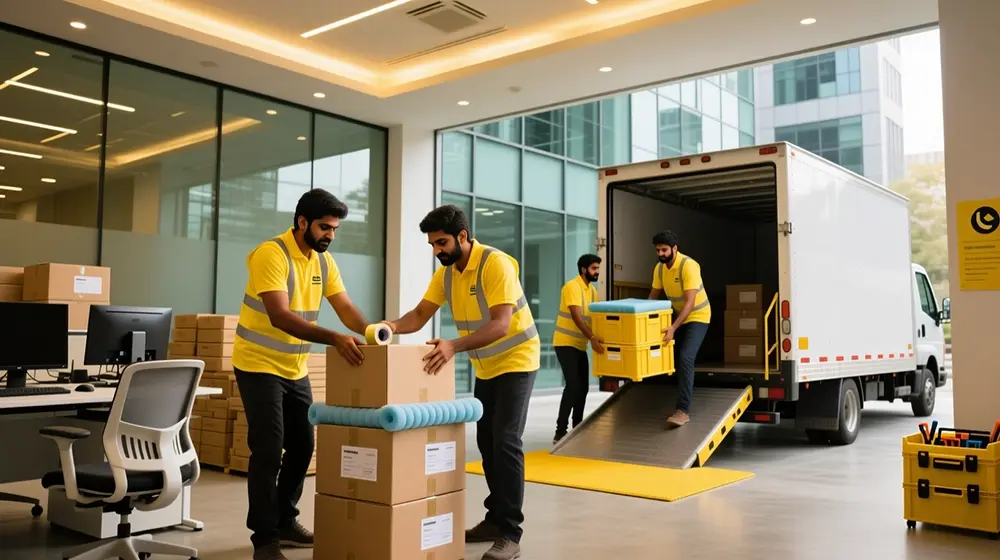
What Makes Office Relocation in Abu Dhabi Complex?
Relocating an office in Abu Dhabi is not just about moving furniture. It involves multiple stages, each with specialized tasks:
- IT Infrastructure Planning (disconnect, transport, reconnect), with backup, labeling, testing.
- Coordination with Facility Management (FM) for permits, safety inspections, elevator and loading bay access, and service elevator scheduling.
- After-hours Booking to reduce disruption during business hours, secure necessary permissions for night/weekend moves.
Also Read : How Do I Choose a Reliable Office Moving Company in Dubai?
Verified Impacts of Poor Planning
- According to BMS Commercial Services (2025), poor timeline management (starting tasks late, making last-minute changes) can increase relocation costs significantly due to rush fees, expedited services, overtime charges, and permit expediting.
- As per Delight movers’s guide Relocations in Dubai, delays due to improper coordination or non-compliance with FM and building rules often stretch downtime from hours to days, reducing productivity and increasing loss of revenue.
- Movers & packers guides in the UAE show average local office move costs starting as low as AED 1,500-5,000 for small offices, but complexity (IT, after-hours, permits) can cause escalation of up to ~30% or more. Though exact percentages vary by project. (Smile Handyy, PackShip Movers)

Office Relocation Cost Drivers & Market Context
Commercial Real Estate Rental Rates in Abu Dhabi
- According to Gulf news, office rents rose in Abu Dhabi’s Central Business District (CBD) by approximately 42% YoY in Q2 2025. Outer CBD areas saw more modest growth of ~18%.
- In ADGM, prime office rents now range between AED 2,800-3,500 per sq m/year for high-quality Grade A offices.
Fit-Out & Occupancy Costs
- The Savills Prime Office Cost Guide highlights that occupancy costs (rent + service + fit-out) are increasing. Premium spaces now carry significant fit-out and furniture/cabling costs.
- The Savills Office Fit-Out Guide 2025 provides authoritative cost ranges for partitions, MEP (mechanical, electrical, plumbing), and professional fees for high-end buildings.
Impacts on Office Relocation Costs
- Small offices will still incur AED 2,000-5,000+ depending on distance, packing, and minor IT relocation. While there is no publicly confirmed benchmark for all these tiers combined, the steep increases in office rents (42% YoY in CBD) indicate that relocation in those zones now represents a larger share of annual expenses. (Based on Savills growth data.)
- Medium and large offices in ADGM/CBD must account for high rental and fit-out premiums, plus the cost of downtime during the move.
Pre-Move Planning & Regulatory Approvals
Facility Management Coordination
- Service Elevators, Loading Docks & Parking Bays Permits
For heavy loads or large moving trucks, you must issue a heavy vehicle pass permit via the UAE Ministry of Interior. This permit covers movements of trucks on roads, including during non-standard times, and is required for vehicles not typically allowed at certain hours. - Inspection of Building Safety & Load Capacity
Before relocation, Facility Management (FM) or relevant authorities may require that fire-safety systems, floor loading capacity, emergency exits, HVAC, and elevator specs are inspected and certified. These are mandated under the Abu Dhabi International Building Code (ADIBC 2013), which sets minimum structural, safety, and facility compliance standards for buildings.
Municipality & Traffic Approvals
- Move Permits & Heavy Vehicle Route Permits
Abu Dhabi Police provides a “Move Permit” via their e-Services portal. This is required when moving heavy vehicles or making large load transfers in restricted zones, particularly during hours when heavy vehicles are banned (e.g. morning or evening peak traffic). - For unusual loads or oversized cargo, you need to request a permit to secure a heavy vehicle route through TAMM (Abu Dhabi government services). This ensures the move complies with public safety and traffic management rules.
- Heavy Truck Bans & Time Restrictions
Trucks of certain weights (e.g. above 2.5 tonnes) are banned during rush hour periods (approx. 7:30-9:00 AM and 2:00-4:00 PM) on city roads. Scheduling your move outside these restricted hours avoids violations and fines. - Vehicle Permit Requirements
If your office relocation involves heavy trucks or large transport vehicles, you may need a heavy vehicle transit permit via the Ministry of Interior (“Heavy Vehicle Pass Permit”). It covers permitted times and conditions for trucks on roads normally restricted
IT Disconnect, Transport & Reconnect
Asset Inventory & Backup
- Begin with a full IT audit: list all hardware (servers, switches, routers, printers, workstations), all software licenses, and network elements (cabling, access points).
- Perform full data backups before any disconnection. Use both onsite and offsite/cloud backups to avoid data loss. Delight movers offers backup & disaster recovery services as part of its office-relocation & IT setup package.
Physical Disconnect & Safe Transport
- Use anti-static, protective packaging for sensitive devices like servers, switches, network cards. Ensure rack-mount hardware is secured.
- Label every cable, device, and rack unit to simplify reconnecting: colour code cabling where possible; map cable runs; note device positions.
- Enlist professional movers with experience in IT hardware transportation. Reliable companies provide structured cable removal and re-installation as a service.

Reconnect & Test at New Location
- Coordinate with ISPs / telecoms (Etisalat, du) well in advance so that internet, VoIP, and other telecommunication lines are ready. Any delay in line activation can extend downtime.
- After hardware is set up, conduct comprehensive testing:
- LAN & Wi-Fi: ensure internal and guest networks work; check bandwidth and latency.
- VoIP phone systems should be tested end-to-end (incoming / outcoming calls, conference functionalities).
- Printers, scanners, peripherals: verify connectivity and drivers are intact.
- Conference / AV systems: video conferencing, projectors, mic/speaker systems need testing before staff use. Trusted companies provide services include Testing Your New Office Network and ensuring everything is functional before first working day.
- LAN & Wi-Fi: ensure internal and guest networks work; check bandwidth and latency.
After-Hours Relocation & Operational Continuity
Why After-Hours Moves Matter
- Moving outside core business hours (late evenings, nights, weekends) reduces disruptions to staff productivity, client-facing operations, and internal workflows.
- Many Grade-A office buildings in Abu Dhabi have strict rules limiting service elevator usage and loading dock access during daytime hours to avoid traffic congestion or elevator blockage. Scheduling moves after hours often avoids these restrictions.
- Buildings are generally constructed to comply with Abu Dhabi International Building Code (ADIBC 2013), which emphasizes safety and minimal interference in shared building systems. After-hours moves help manage safety risk when fewer people are in the building.
Mandatory Safety & Compliance Requirements
- All fire safety systems must be operational and available during any moving operations. The UAE Fire and Life Safety Code of Practice requires that access to fire exits is maintained and that fire suppression systems are not blocked.
- Elevators and lifts must be available for heavy goods, and freight or service elevators used for moving should be booked in advance. In many buildings inspection or maintenance schedules during after-hours must be aligned.
Scheduling Tips & Operational Steps
| Task | Best Practice |
| Elevator / Dock Booking | Book the service elevator or loading dock at least 1-2 weeks ahead. Confirm availability with building management. |
| Security Clearances & ID Passes | Request identification badges for all movers. Many buildings require movers to pass through security checkpoints; physical IDs, company letters, or vendor NOCs may be required. |
| After-Hours Premiums & Overtime Fees | Expect differential pricing. Moving outside regular hours often incurs additional costs: overtime wages, security staff, elevator use after hours. These premiums can be 10-20% higher depending on the building policy (while exact schedules vary by building, service providers like ISS Relocations note these extra charges). (iss-relocations.com – Local Moving Services UAE) |
Real-World Examples & High-Authority References
- ISS Relocations provides commercial moving services across UAE, including after-hours moves, and notes that operational continuity is improved with moves scheduled during non-peak traffic periods. (iss-relocations.com)
- The Abu Dhabi Police Move Permit service includes restrictions on times when heavy vehicles or large load traffic is allowed in certain zones. Securing a Move Permit ensures legal compliance for after-hours relocation activities.
Packing, Labeling & Asset Tracking
Why Systematic Packing Matters
Efficient packing and clear labeling reduce the risk of loss, damage, or misplacement during relocation. According to corporate relocation guide, poor labeling is one of the top causes of extended downtime, as teams spend hours re-sorting furniture and IT equipment after the move.
Step-by-Step Packing & Labeling Procedure
1. Department & Asset Labeling
- Color-Code by Department: Assign a unique color for each department (HR, Finance, IT, Operations).
- Number Workstations: Label workstations sequentially (e.g., HR-Desk-03, IT-Desk-07) to help movers place items in the correct new location.
- Tag Furniture & Electronics: Use durable tags or stickers for chairs, tables, monitors, CPUs, and docking stations.
2. Box Inventory & Packing List
- Create a Packing Manifest: Maintain a spreadsheet or checklist listing all boxes, contents, and destination rooms.
- Mark Fragile & Heavy Boxes: Clear labeling (“FRAGILE”, “HEAVY”) ensures proper handling and prevents damage.
3. Secure High-Value Assets
- Transport Separately: Laptops, external drives, sensitive documents, or company seals should be moved under direct supervision or by authorized staff.
- Use Tamper-Evident Seals: For confidential archives or sensitive material, tamper-evident tape can provide an additional security layer.
Asset Tracking During the Move
- Barcode or QR Tracking: Larger organizations can use barcoding or QR code systems to scan boxes in and out of vehicles and verify delivery at the destination.
- Move Log Verification: The project coordinator should sign off each box or workstation as it arrives at the new office, cross-checking with the master list.
- Damage & Exception Recording: If an item is missing or damaged, note it immediately to file claims with the mover’s insurance coverage.
Industry Best Practices & Verified Guidance
- ISO 9001-Aligned Relocation Process: Certified movers follow ISO-aligned processes for corporate moves, which include inventory control and asset verification as part of their SOP.
- Security & Confidentiality Compliance: Global relocation companies emphasize secure chain-of-custody protocols for high-value or confidential items, aligning with ISO 27001 (information security) standards.

Insurance, Safety & Liability
Transit / Moving Insurance
In the UAE, moving insurance is not mandatory, but it is strongly recommended for high-value IT equipment, servers, and sensitive office assets. Relocation insurance protects business assets against loss, theft, or damage during packing, transit, and unpacking.
There are two main coverage types available to UAE businesses:
- Carrier Liability Insurance – basic coverage, usually calculated per weight or volume.
- Released Value Protection – low-cost option but limited payout.
- Full Value Protection – covers repair, replacement, or full reimbursement of lost or damaged assets.
Businesses should always request written confirmation of coverage type and limits before the move.
Regulatory Safety & Fire-Code Compliance
Compliance with UAE Fire & Life Safety Code of Practice, published by Dubai Civil Defence (DCD), is essential when moving server racks, combustible materials, or heavy equipment. The Code specifies requirements for:
- Separation and ventilation of flammable materials.
- Fire-resistance ratings for server rooms and data cabinets.
- Safe routing of goods lifts and emergency power requirements during moves.
The section “Fire Service Operational Requirements” explicitly mandates that goods elevators and lifts used for transport comply with fire-safety power supply standards and remain accessible during emergencies.
For industrial and commercial facilities, obtaining DCD / Civil Defence approvals prior to moving hazardous or heavy items is mandatory to avoid fines and permit delays.
Key Liability Considerations
- Value Declaration – Declare accurate replacement value for all assets in insurance paperwork. Under-declaring may result in partial or no compensation in case of damage.
- Policy Exclusions – Many insurers exclude pre-existing damage, improper packing, or force majeure unless specifically covered. Review the policy wording carefully.
- Mover’s Liability Limitations – Movers may limit liability to weight or volume. For critical IT assets, request Full Value Protection coverage for replacement cost recovery.
Communication & Change Management
- Notify Employees Early: Inform staff of move dates, changes to seating plans, access protocols, security badge procedures, and after-hours entry. Early notice (2-4 weeks ahead) reduces confusion and helps maintain morale.
- Update Stakeholders & Legal Entities:
- Clients & Suppliers: Send communications notifying change of address to avoid loss of deliveries or service disruptions.
- Trade License and Business Address: Abu Dhabi Department of Economic Development requires companies to apply for a change of business address via its licensing amendment process.
- VAT / FTA Records: The Federal Tax Authority mandates submitting amendments (address, ownership, etc.) within 20 business days of any change. Failures lead to penalties.
- Clients & Suppliers: Send communications notifying change of address to avoid loss of deliveries or service disruptions.
- Communication Channels: Use internal memos, emails, FAQs, and signage. Provide contact points for questions (move coordinator or project manager). Make sure everyone understands building access, parking, elevator use, etc.

Risk Mitigation Table
| Risk | Impact | Mitigation |
| Missed permits | Move delayed or fines imposed | Secure FM, police, traffic, and municipal permits at least 2-3 weeks ahead |
| No IT backup | Data loss; extended downtime | Perform full backups; verify integrity; store offsite/cloud |
| No after-hours slot | Operations disrupted; downtime | Reserve service elevators, loading docks in building for after-hours move dates |
| Poor labeling / no inventory | Lost or misplaced assets; delays | Use detailed move log; label all boxes/workstations; track key equipment |
Choosing the Right Relocation Partner
- Licensed & Certified Movers: Ensure the mover is registered with relevant authorities (e.g. Abu Dhabi Department of Economic Development) and holds any required permits for commercial moves. Logisty advises verifying licenses and certifications when hiring movers/packers.
- Experience in Office Relocation & FM Liaison: Choose a partner who has done office moves, handled IT disconnect/reconnect, obtained building management / FM approvals. Movers who communicate with building FM to manage elevator/load dock access are advantageous.
- After-Hours Moving Capability: The mover should be able to operate beyond normal hours, with security clearance, and understand building rules around service elevator use.
- Insurance & Liability Provisions: Confirm which insurance types are offered (basic liability, full value protection), and ensure items are covered for damage during transit, packing, and installation.
Post-Move Checklist
- Utility Reconnection: Confirm power, water, internet, telecom services are restored and functional in the new location.
- FM Sign-Offs / Compliance Inspection: The building owner / FM should inspect for any damage, ensure safety systems (fire alarms, exits, lighting) are fully operational.
- Complete IT Testing: LAN, Wi-Fi, VoIP, printers, servers, AV systems should be tested and functioning before staff fully occupy the space.
- Safety & Security Systems: Verify all security access systems (badges), alarm systems, CCTV, emergency lighting are installed and operational.
- Staff Orientation & New Layout: Distribute new seating maps; explain access, emergency procedures; provide orientation to new facilities (restrooms, exits, meeting rooms).

Conclusion
Office relocation in Abu Dhabi involves many interlinked steps: communicating changes, updating legal/business registrations, securing appropriate permits, coordinating with FM, managing IT disconnect/reconnect, planning after-hours moves to minimize disruption, and ensuring post‐move compliance. Verified high-authority sources (DDA, FTA, Abu Dhabi government sites) mandate timely updates to business address and licensing, underlining that administrative compliance matters almost as much as physical moving logistics.