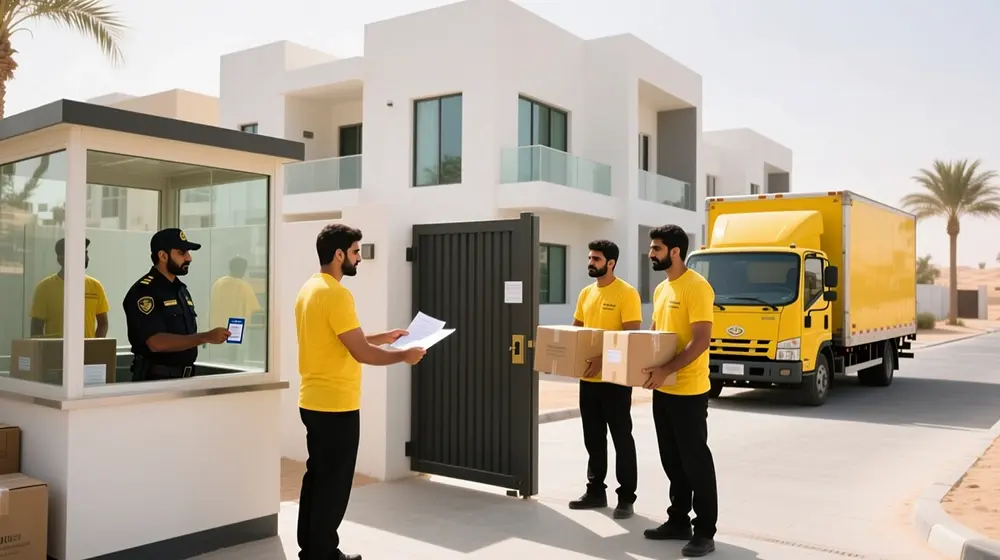
Moving in Al Ruwais doesn’t work the same way it does in Dubai, Sharjah, or even Abu Dhabi City. People expect a residential shift to be as simple as calling a mover and clearing a hallway, but in Ruwais the first checkpoint isn’t the lobby, it’s the gate. Access is monitored, names are verified, and trucks don’t get far unless someone has already shared the details with the right person. Most residents only realize this after the movers are already parked and waiting for a call-back from security (Access Clearance Incidents – Ruwais Housing).
On paper, nothing about moving day looks formal. In practice, supervisors and gate staff expect IDs, vehicle information, and confirmation that the resident actually has permission to bring a moving crew through. That’s why an “approval-day checklist” isn’t an extra, it’s what keeps the truck from sitting outside in the sun while calls get made to reach the right contact.
Also Read : Home Movers in Umm Al Quwain: Quiet-Hour Moves & Elevator Email Template
Understanding Home Relocation in Al Ruwais
Al Ruwais is built around a mix of company-managed housing, gated compounds, and residential pockets tied to industrial and energy-sector zones. Some tenants live in low-rise blocks with on-site administration. Others stay in villas or residential rows that fall under broader community oversight. The style of the home doesn’t decide the rules, the access point does.
Residents often assume that because the distance is short, permission isn’t an issue. In reality, even a 3 km move can be delayed if the guard doesn’t have the vehicle details or if the driver’s name wasn’t submitted ahead of time. In one compound, residents recalled being asked for Emirates IDs at both entry and exit, even though they’d lived there for years (Security Gate Anecdotes – Al Ruwais). The system is less about inconvenience and more controlled movement around high-value zones.
Key Considerations for a Smooth Move
People who relocate in Ruwais without setbacks all seem to do three things: they warn someone early, they have IDs ready for everyone coming in, and they don’t assume approval exists unless it’s clearly received. Movers who arrive without notice often end up waiting for a supervisor who is off-duty or unavailable. Timing also matters more here than in most emirates. Trucks arriving during restricted traffic windows or midday safety hours often get held back until the slot opens again (Transport Timing Checks – Abu Dhabi Guidelines).
On top of that, approvals don’t always come from the same person. In some areas, the building coordinator handles it. In others, the housing office needs to notify the gate directly. Residents who figure out “who needs to know” even one day earlier usually avoid the drawn-out back and forth that starts when a guard isn’t aware of the move.
Access Rules in Residential Zones (Ruwais Context)
Unlike open residential areas in other emirates, most communities in Al Ruwais don’t let moving trucks drive straight in. Even when the housing looks familiar, low-rise buildings, villa rows, or family compounds, access is usually tied to a controlled entry point. A guard or security clerk often needs to confirm who is arriving, what company they’re with, and whether the resident already cleared it in advance. Many tenants only learn that after the crew is stopped outside and someone is trying to reach a number that isn’t answering.
Some residents rely on the assumption that “if I live here, the movers can follow me in,” but that doesn’t always hold. One family reported that their driver had to wait thirty minutes outside the security post because the housing office hadn’t recorded the plate number. Another tenant mentioned that the guard refused entry until the contact person inside the compound returned the call and confirmed the move (Resident Entry Reports – Al Ruwais). These are not exceptions, they’re common enough to plan around.
Move-In / Move-Out Clearances
Clearance doesn’t always come on paper, but someone with authority usually needs a heads-up. In some blocks, the housing office sends a short note to the gate if residents inform them beforehand. In others, the guard keeps a printed list or a WhatsApp confirmation from the building supervisor. Tenants who skip this step often face delays, not because anyone objects to the move, but because the gate staff can’t allow unknown crews inside without proof that someone is expecting them.
This isn’t about formality, it’s about not surprising the people who manage the entrance. If the guard doesn’t see a note, they look for a phone number. If nobody answers, everything stalls until someone authorizes access.
Residential Authority Requirements
In certain residences, especially those tied to company housing or managed developments, tenants may be asked to show tenancy details, often a Tawtheeq registration or equivalent, before any clearance is noted. This is more common for new tenants moving in than for those already inside the compound, but it still comes up. Some supervisors ask for a copy of the unit number and ID to confirm the request isn’t coming from an outsider.
For existing residents moving out, the formality is lighter, but the expectation to notify remains. The idea is simple: if something happens at the gate, there should be a record that someone inside requested access.
Security Checkpoints & Gate Etiquette
The guard desk isn’t just a symbolic stop. Trucks, vans, and even family cars sometimes have to pause while names or numbers are cross-checked. Many security staff write down plate numbers and driver IDs before allowing anyone through. They’re not trying to create hassle, they’re following a process shaped by the area’s industrial proximity.
People who handle this well usually send driver names or ID copies ahead of time. That way, when the movers arrive, the guard only has to match a name on a list, not start a phone search for confirmation.
Documents You’ll Actually Use
Most residents don’t carry folders around on moving day, but a few key items can prevent half an hour of confusion:
- Emirates ID, for the tenant and, if requested, the driver
- Tenancy proof, Tawtheeq or housing letter if the move involves a new unit
- Vehicle details, plate numbers or company name shared ahead of time
- Contact on-site, someone ready to answer the phone if the guard calls
Transport Routes & Industrial-Edge Logistics

Even when the distance is short, movers in Al Ruwais can’t drive in and out the way they would in a typical suburban area. A truck might only need to cover a few kilometers, but the route usually passes through monitored zones or roads that limit heavy-vehicle movement during certain hours. Drivers familiar with Ruwais know that getting close to the gate isn’t the challenge, getting through it at the wrong time is what causes delays (Driver Timing Accounts – Western Region Moves).
| Topic | What Actually Happens in Al Ruwais | Why It Matters |
| Short Distance, Longer Checks | Even if the home is close by, movers often wait outside the gate until someone confirms their entry. | The gate, not the road, controls timing. |
| Two-Part Routing | Crews plan an approach route first, then wait for approval before moving inside the residential zone. | Prevents trucks from being turned around at the barrier. |
| Holding Areas Near Gates | Movers sometimes park in nearby lay-bys or side lanes until a call, message, or name-check clears them in. | Avoids blocking controlled entrances or attracting attention. |
| Internal Street Access | Inside the compound, narrow or curved roads can force movers to stop short and carry items by hand. | Not every truck can drive to the doorstep. |
| Non-Local Moves | Crews coming from Dubai, Abu Dhabi City, or Ajman rely on accurate plate and driver name submissions, not just arrival time. | If the driver changes, entry can be delayed even when everything else is arranged. |
| Weekday vs Weekend Timing | Calls get answered faster on weekdays. On weekends, clearance can stretch out if decision-makers aren’t on-site. | The day matters less than who is reachable. |
| Friday Moves | Some crews travel early for quieter roads, but still wait at the gate if nobody confirms. | Low traffic doesn’t replace pre-approval. |
| Staging Strategy | Experienced movers stay outside until told to enter instead of showing up at the barrier unannounced. | Avoids back-and-forth with security staff. |
| Contact-On-Standby | The resident or building contact needs to be reachable at the moment the truck arrives. | Security won’t guess who to call if a name isn’t logged. |
Identity Checks, Badges & Who Must Be Listed
In Al Ruwais, access isn’t based on familiarity, it’s based on names, IDs, and whether someone inside has already confirmed who’s coming. Security staff don’t assume the driver or movers are legitimate just because they arrive with the tenant. They expect to see a name on a list or a message from the resident or building office. Even small vans get stopped if the guard hasn’t been informed. People who’ve moved before in Ruwais often mention the same thing: the fastest entries happen when the crew, the plate number, and the resident’s name are already recorded. When nothing is logged and the guard has to start making calls, the process slows down, even if everyone is polite and cooperative.
Residents, Family Members & Movers
Anyone stepping past the gate, not just the main tenant, can be questioned. If family members come along, they may be asked to show Emirates IDs. Movers sometimes need to present theirs too, especially if they’re entering residential blocks tied to company housing. The point isn’t suspicion, it’s record-keeping.
Vehicle IDs & Plates
A truck or van that isn’t logged ahead of time almost always gets stopped. Guards typically ask for a plate number or the driver’s name before lifting a barrier or checking off a list. Movers who operate in the Western Region know this well and often send their details to the resident before arrival.
Visitors vs. Registered Occupants
If a friend or relative comes to help on moving day and their name isn’t familiar to the gate staff, they may be asked to wait until someone inside confirms their presence. This is common in compounds that house multiple families under a managed system.
Approval-Day Timeline (Hour-by-Hour)
In Al Ruwais, moving day doesn’t start when the truck arrives, it starts when the right person confirms access. A lot of residents think showing up early gives them an advantage, but timing means nothing if the gate staff hasn’t received the names, plates, or approvals. The day usually runs smoothly when someone inside has already passed the details to security. When that step is missed, movers wait outside and residents make rushed calls while the clock runs.
The 24-Hour Pre-Check
The day before the move is when most of the time is actually saved. People who plan properly don’t wait until morning to notify anyone. They check three things quietly the night before:
- Has the housing office or supervisor acknowledged the move?
- Did the gate staff receive the vehicle or driver information?
- Is there any complication with timing, especially if the move overlaps with the midday work break or restricted hours in the emirate?
Gate-Arrival Protocol
When the truck reaches the entry point, the guard looks for one of three things: a listed plate number, a confirmed driver name, or direct communication from someone inside. If none of those appear quickly, the vehicle waits, even if the tenant is only a few hundred meters past the barrier. Movers who’ve been through this before don’t rush the gate. They park nearby, give a quick call or text, and then wait for a nod before driving in. Residents sometimes meet them just outside to keep things moving if phone reception is spotty.
Elevator/Loading Bay Etiquette
Not every residential block in Ruwais has a service elevator, but where one exists, timing can affect who uses it first. Some buildings prefer loading to happen in the morning so neighbors aren’t disturbed, while others limit noise in the late afternoon when families return home.
People who coordinate properly tell the movers to load in batches, especially if the elevator is shared or narrow. In some villas with internal access, the focus shifts to driveway space instead of lift time. Either way, it’s the timing that decides whether things stay calm or get delayed.
Packing & Handling for Industrial-Coastal Conditions
In Al Ruwais, packing isn’t just about wrapping things and loading a truck. The town sits close to industrial zones and the coast, which means heat, dust, and salted air can affect belongings if they’re left exposed for too long. Movers who’ve worked in the area don’t stack furniture outdoors “just for a minute” unless the truck is ready to take it immediately. Items that sit near the curb or loading area can pick up moisture or fine dust faster than people expect.
Indoor staging works better in most cases, especially for electronics and upholstered furniture. In villas, residents sometimes use covered carports or shaded entryways to keep belongings off the ground until the movers are ready. In apartment blocks, people often choose a hallway corner near the door or elevator so nothing sits outside if the lift is being used by someone else. The goal isn’t fancy packing, it’s reducing exposure and keeping the move from slowing down when temperatures rise (UAE Ministry of Climate Change and Environment).

Moisture-Sensitive Belongings
Wooden furniture, fabric sofas, and anything with metal fittings react quickly to temperature and humidity. Even on cloudy days, the combination of dust and moisture can cause marks or slight swelling if items are left on the pavement or a tiled walkway. Movers familiar with Ruwais usually keep high-risk pieces indoors until the truck is positioned at the gate or outside the building.
Dismantling & Reassembly
In apartments, large items often have to be taken apart to fit through elevators or stairwells. In villas, space isn’t always the issue, it’s doorframes and tight corners that cause the hold-ups. Some families start unscrewing bed frames and table legs the night before so they aren’t rushing while movers wait outside.
Electronics & Appliances
Televisions, fridges, washing machines, and desktops don’t handle dust or direct sunlight well. Families often unplug and clean them a day earlier to avoid moisture buildup or rushed lifting during approval windows. Movers sometimes wrap screens and appliances with cloth or padded covers instead of plastic because it breathes better in the heat.
Inventory & Labelling
Labeling isn’t always neat or color-coded, sometimes it’s just handwritten notes on tape, but it helps movers carry boxes straight to the right room when time is limited. In Ruwais, entry windows can be narrow, so crews don’t want to stack all belongings in the lobby or yard, only to move them again later.
High-Value Items
Instead of insuring or logging expensive pieces formally, many residents in Ruwais keep valuables with them or move them in a private car. That includes jewelry, documents, laptops, and electronics that shouldn’t sit near the truck if there’s a delay at the gate. Movers don’t object, it reduces their responsibility in case something shifts or gets misplaced.
Family & Tenant Coordination on Move Day
Most people think the gate approval and the movers are the main hurdles in Ruwais, but it’s often the people inside the home who shape how the day actually goes. If a family member isn’t ready to open the door, or someone steps out with the only access card, the movers stand idle for reasons that have nothing to do with rules. The residents who relocate smoothly usually decide, the day before, who will talk to security, who will greet the movers, and who will stay reachable by phone in case the gate staff asks for confirmation. In apartment blocks, one overlooked detail is corridor flow. If children, elderly relatives, or neighbors are passing through at the same time furniture is being moved, things slow down quickly. Some families quietly let their neighbors know the evening before that a truck will be coming, not to announce it formally, but to prevent confusion when boxes appear in the hallway.
In short, the coordination inside the home matters as much as whatever is happening outside. Doors open on time, calls get answered, and no one is scrambling for a document they forgot was in someone else’s bag. When roles are loosely assigned in advance, the move feels routine, even in a place where gates, guards, and timing windows shape the day more than the distance between houses.
Approval-Day Checklist & Quick Reality Notes
People in Ruwais don’t walk around with printed forms or binders on moving day. What actually helps is having the right things ready before anyone reaches the gate. Most delays don’t happen because something is wrong, they happen because someone didn’t answer a call, couldn’t pull up a message, or forgot to warn the guard that a truck would show up.
| Item / Detail | Why It Matters in Ruwais | What Usually Goes Wrong if Missed |
| Emirates ID (Resident + Driver) | Guards check faces against names if there’s any uncertainty. | Driver stuck at barrier while calls go back and forth. |
| Plate Number Shared in Advance | Security often logs vehicles before they arrive. | Truck is asked to wait off to the side until someone confirms details. |
| Contact Person on Standby | The gate staff need to confirm quickly if something isn’t listed. | Phone rings unanswered and entry is paused. |
| Housing / Supervisor Approval Message | Acts as the “green light” even if it’s just a WhatsApp reply. | Guard says “no record” and refuses immediate entry. |
| Move Timing Confirmed 24 Hrs Earlier | Prevents clashes with peak restrictions or midday pauses. | Movers show up during a blocked slot and have to sit idle. |
| Loading Space Cleared | Helps trucks park without blocking or upsetting neighbors. | Furniture gets carried from far away, slowing everything. |
| Backup Number (In Case Main Contact Is Busy) | Gives the guard another way to verify. | Entry gets delayed because only one person can approve. |
| Photo or Screenshot of Confirmation | Useful if the guard didn’t get the forward. | Resident argues verbally with no proof to show. |
| Awareness of Midday Break (If Summer) | Heavy lifting outside pauses by law. | Crew forced to stop halfway and lose time. |
| Neighbors Given a Heads-Up (Optional but Smart) | Avoids unwanted complaints during loading. | Someone reports “unauthorized activity” and guard intervenes. |
Final Takeaways from Real Move Days in Ruwais
A move in Ruwais doesn’t fall apart because the system is complicated, it falls apart when the people involved assume nothing needs to be said in advance. The gate isn’t the problem. The truck isn’t the problem. The paperwork rarely matters as much as timing and a name on record.
Residents who’ve been through it know the pattern: a short message the evening before, an Emirates ID in the pocket, and someone ready to answer the phone when the guard calls. That’s usually all it takes. Those who skip that step aren’t “blocked”, they’re just stuck waiting while security tries to figure out who signed off.
Inside the compound or the building, it’s the same logic. If the movers arrive before the hallway is clear, or if the person with the keys has stepped out, nothing moves until someone sorts it out. The place isn’t built to slow people down, it’s built to make sure the right ones go through at the right moment.
What makes Ruwais different isn’t a stricter rulebook. It’s the expectation that you’ll tell someone before you show up. Once that part is handled, the rest of the day looks a lot more ordinary.
FAQs – What People Actually Ask
Is prior approval always needed before movers arrive at the gate?
Not every compound uses a formal system, but if the guard doesn’t have a name, plate, or message to reference, the vehicle won’t be waved in. A two-line heads-up the day before avoids awkward waiting.
Can I just show my Emirates ID and let the movers follow me in?
Sometimes that works, but only if security already knows a move is scheduled. Without that, they’ll pause the truck until someone inside confirms.
What if the moving company changes the driver or vehicle at the last minute?
That’s one of the most common reasons for delays. If the plate number or driver name doesn’t match what was shared, security hesitates. A quick message fixes it before arrival.
Do kids, relatives, or helpers need to be listed too?
If they’re entering with the movers or carrying items through the gate, they may be asked for ID or a name check. Guards don’t guess, they verify.
Are weekend moves easier or harder in Ruwais?
It depends on who needs to approve the entry. On weekdays, supervisors and housing offices answer faster. On Fridays, a delayed phone call can hold everything up.
What slows down moves more, rules or people?
Almost always people. Missed calls, no prior notice, wrong plate numbers, or arriving during midday work breaks cause most of the hold-ups.
Do I need printed documents on the day?
Printed papers aren’t the issue, quick verification is. A saved screenshot, ID at hand, and the right person expecting the truck matter more than official-looking folders.