
On paper, it looks like an easy pull: leave Dubai, head north, hit RAK, unload, done. That’s what people think the first time. But once you’ve actually run that line with a full load and a crew on the clock, you stop calling it simple. The timing, the weather, and the stretch you pick decide whether you arrive fresh or two hours late with a building supervisor staring at his watch. The coastal road fools a lot of first-timers. It feels relaxed at the start, but by the time you’re past Ajman and into the Umm Al Quwain stretch, the humidity can sit on the cabin like steam. Fog creeps in during the cooler months, and visibility drops fast before sunrise. If you’re hauling at the wrong hour, patrols near the beachfront and Marjan Island slow you down just when you think you’re close.
E311 looks cleaner, but only if you leave before the school run and Sharjah’s industrial traffic start stacking in the right lanes. Miss that early slot and the truck crawls past the cargo exits before you even hit the UAQ turn. And once you’re late on that road, you don’t make the time back — the inland heat rises earlier than people expect, and loaded vehicles burn fuel faster holding speed. You learn quickly that the map is not the move. The route only behaves if the timing does, and the clock starts working against you before the tires hit the highway (Driver Logs from Northern Emirates Routes)
2. The Coastal Stretch Isn’t the Soft Option People Think It Is
A lot of folks pick the coastal run because it “looks calmer” on the map. That’s usually someone who hasn’t driven it with a loaded vehicle or tried to hit a delivery slot in RAK before noon. The road behaves differently depending on the hour, and the weather near the shoreline has a way of slowing trucks in ways GPS never warns about.
Humidity builds fast once you pass Ajman and creep toward Umm Al Quwain. On some mornings, the windshield fogs from the outside, not the inside, and the AC can’t balance both cabin cooling and visibility at the same time. Crews end up cracking windows or wiping glass at exits just to see the lane lines. That sounds small, but it costs minutes, and those minutes add up before the RAK border.
Then there’s the enforcement factor. Around Marjan Island, Mina Al Arab, and the beachside resorts, patrol teams don’t just watch cars. If a loaded truck looks like it’s carrying residential goods or commercial stock without clear tagging, they pull it for a quick check. Nothing dramatic—but five minutes here, ten there, and suddenly you’re off schedule.
The coastal road works only if you leave early enough to stay ahead of the humid rise and the morning watch shifts. Once you miss that window, the “easy road” starts acting like a trap you saw too late.
3. E311 Isn’t Automatically Faster — It Depends on When You Roll Out
People love saying, “Just take E311, it’s faster,” but that only works if the truck is moving before most of the city wakes up. Once Sharjah starts filling its lanes, the timing goes out the window. What slows you isn’t the highway itself — it’s the traffic patterns around the industrial exits, the rush-hour squeeze, and the way smaller vehicles cut across truck lanes after 7 AM (Sharjah RTA – Corridor Traffic Flow Advisories).
If you’re leaving Dubai after the early slot, you’re already behind. Service vans, pickups, and delivery vehicles start pulling into the merge points along the Sharjah stretch, and a loaded truck has no room to recover once the pace drops. Fuel burn also rises when the AC has to fight inland heat, especially after 8 AM when the sun hits the road harder than the coastal side.
By the time you pass the mid-corridor, the temperature inside the cabin starts climbing. Drivers push the cooling system just to stay alert, and that chews through diesel faster than people think. On long runs, one extra fuel stop can destroy a well-planned arrival slot in Ras Al Khaimah (National Center of Meteorology – Inland Temperature Escalation Reports)
The crews who understand this stretch don’t just “choose” E311 — they match it to a departure hour. Miss the 6:00–6:30 window, and the same road turns into a slow pull that you don’t recover from before RAK.
4. What Drivers Check Before They Even Pick a Route
Nobody on this run flips a coin between the coastal road and E311. The guys who’ve done it a dozen times do a quick mental sweep before turning the key, because one bad choice at 6 AM turns into a three-hour delay by 10. Here’s what they look at — not what the map says, but what the day might do to them:
· Fuel load vs AC usage — If the vehicle’s carrying weight and the day’s already warm, they don’t risk a halfway refill. The inland heat chews diesel faster than people expect.
· Toll timing and plate registration — If Salik or the RAK gate system hasn’t synced the plate, they avoid surprise charges or pull-asides at exit points.
· Building slot at the destination — Some towers and compounds in RAK won’t accept vehicles past a set hour, even if the truck is already at the gate.
· Fog risk on the coastal belt — November through March can drop visibility without warning between UAQ and Mina Al Arab. Some drivers refuse the shoreline run on humid mornings.
· Heat build-up inland after 8 AM — E311 holds heat earlier than the beach road, and cabin temperature starts draining drivers before they reach exit points.
· Patrol placement by time of day — Officers near Marjan or the Sharjah freight stretch rotate around mid-morning, and that’s when loaded trucks get flagged more often.
Nobody writes this list down, but it lives in the heads of the movers who don’t like repeating mistakes. One wrong guess at departure makes the rest of the day something you can’t fix later.
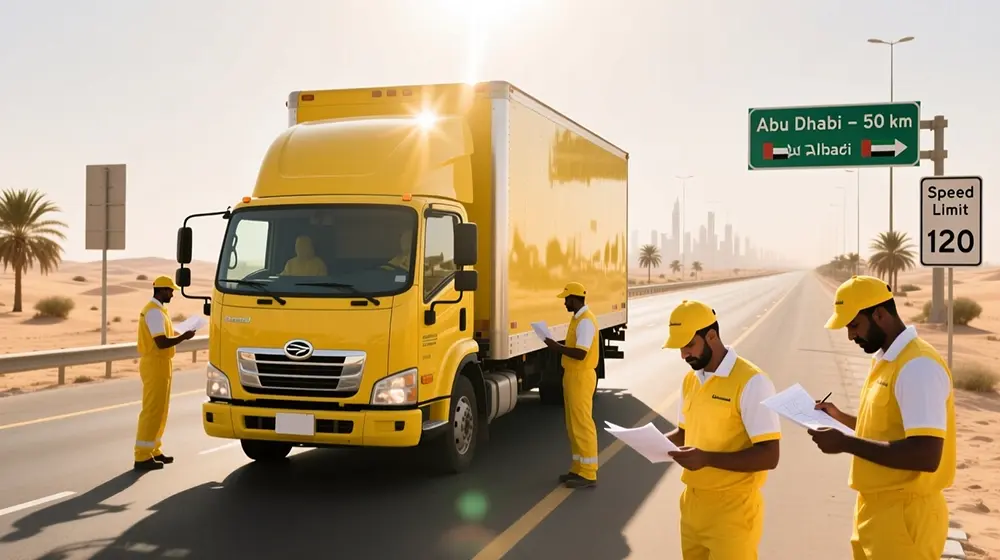
5. Coastal vs E311 — The Reality, Not the Map
People think it’s just two roads and one destination, but the route decides your day before you even hit the first fuel stop. Here’s how the two paths actually behave when there’s a loaded truck, a crew on the clock, and a delivery window waiting in Ras Al Khaimah (Federal Transport Route Logs; NCM Coastal Humidity Bulletins; Sharjah Traffic Flow & Patrol Rotation Notes):
| Factor | Coastal Road (E11 Stretch) | E311 / Sheikh Mohammed Bin Zayed Road |
| Distance Feel | Feels shorter but drags after Ajman | Feels longer but runs straighter |
| Biggest Risk | Fog pockets + patrols near resorts | Traffic crush near Sharjah exits |
| Fuel Burn | Lower at dawn, worse in humidity | Higher after 7 AM due to heat and AC |
| Inspection Chances | Marjan & UAQ patrols spot-check | Checkpoints less frequent early morning |
| Time Loss Trigger | Late start + fog buildup | Missing 6–6:30 AM launch window |
| Best Use Case | Pre-7 AM with light wind | Before the school run and freight surge |
| Worst Mistake | Leaving after the humidity spikes | Entering after Sharjah traffic wakes up |
The drivers who know these roads don’t flip a coin — they match the route to the hour, the truck, and whoever’s waiting to open a gate on the other end.
6. The RAK Entry Problem Most People Don’t See Coming
Getting to Ras Al Khaimah isn’t the finish line—getting into the property is. That’s where most first-time moves lose the plot. A truck can reach the city on time and still sit outside a gate because the building or compound never cleared the arrival, or because security wants paperwork no one thought to print.
Areas around Al Hamra, Mina Al Arab, Julphar Towers, and the older Nakheel side don’t follow one rulebook. Some want plate numbers logged a day earlier. Others need an NOC from the tenant or landlord. A few gated
villas won’t open the service entrance if the driver can’t show ID that matches the move request. Even timing plays against you—some compounds lock down access between late morning and late afternoon, especially when temperatures rise or resident traffic picks up.
Crews that run this corridor don’t gamble on the “we’ll sort it when we get there” approach. They get names, gate codes, and loading bay slots confirmed before the truck even leaves Dubai. If not, you end up parked on the service road watching the sun climb, with the fuel tank draining just to keep the cabin cool (Ras Al Khaimah Municipality Access Notices).
7. When You Leave Decides If the Day Runs Smooth or Falls Apart
Here’s what actually happens when trucks roll out at different hours. Nobody talks about this in brochures — but drivers, supervisors, and building guards know these patterns by heart:
| Departure Window | What Actually Happens on the Road | How It Hits Arrival in RAK | Time Outcome |
| 4:30 – 5:30 AM | Roads are cool, patrols aren’t fully active, Sharjah still asleep | Gates in RAK open on arrival, less argument at entry | Saves 1–2 hours |
| 6:00 – 7:00 AM | Sharjah flow wakes up, inland heat starts building | Still lands before most compounds tighten access | Neutral to slight gain |
| 8:00 – 9:00 AM | Fog risk on E11, traffic buildup on E311, crew energy dips faster | RAK security starts pushing trucks to afternoon slots | Loses 1–3 hours |
| After 10:00 AM | AC fights heat, fuel burns faster, patrol activity increases | Most sites refuse unloading until late day or next morning | Day lost or split move |
You don’t recover time on this route once you miss the first window. The road won’t speed up for you, and Ras Al Khaimah buildings don’t care that you “left a bit late.” The clock stops making deals after sunrise.
8. Leaving After 8 AM Is Where Most Moves Go Wrong
Nobody plans to start late — it just happens. An elevator delay, a paperwork mix-up, a client running behind — and suddenly the truck rolls out after sunrise thinking it’ll “make up time on the highway.” It won’t. Once you miss that early slot, the road turns into a slow bleed you can’t fix later. On E311, the Sharjah merge starts clogging before 8:30. You don’t crawl for long, but you crawl just enough to miss the rhythm. The AC has to work harder because the inland heat picks up earlier than along the coast. Fuel doesn’t vanish instantly — but you end up scheduling a stop you didn’t plan for.
The coastal road doesn’t save you either. Fog patches near Umm Al Quwain or damp air around the resorts slow visibility, and patrol cars get more active once morning shifts change. They don’t always stop you, but a single pull-over wipes out any illusion of a “quick run.” By the time the truck reaches RAK, the story has already flipped. Some compounds don’t allow access past 11 AM. Others tell the crew to wait until after Asr. And waiting with a loaded vehicle in rising heat drains both the driver and the clock. It’s not traffic that ruins the move — it’s the assumption you can push past a late start and still arrive on schedule.
9. The Crews Who Don’t Lose Time Aren’t Lucky — They’re Prepared
People think it’s the road that decides how the day goes, but it’s the crew’s habits long before the ignition turns. The movers who reach Ras Al Khaimah without drama don’t guess when to leave — they build the timing around the gate they’re delivering to. They don’t wonder which road to take at the last minute either. They already know which stretch will work for that hour, that cargo, and that building’s entry rules. The difference shows up in small decisions you don’t see on paper. They print the approvals instead of trusting a screenshot. They top up fuel before the highway instead of hoping for a clean stop near Umm Al Quwain. And they don’t wait for Sharjah to wake up before crossing the first corridor. They know exactly how fast the morning can close on them.
Teams that run this road regularly don’t talk about beating traffic — they talk about beating the window that causes traffic. They don’t gamble on coastal fog or hope patrols are busy somewhere else. They’ve watched enough trucks get held at the wrong hour to know the signs. The job looks smooth because the timing is tight, not because the route is easy. When a crew arrives, unloads, and clears RAK without delay, that’s not luck — that’s someone making calls and decisions hours before the truck rolled.
10. Final Take — The Route Isn’t the Problem, the Timing Is
People assume the Dubai to RAK stretch is a straight shot and the road will decide how the day goes. It rarely does. The move is already won or lost before the driver even locks the first box into the truck. What slows most jobs isn’t traffic, or tolls, or checkpoints — it’s the first hour of the day and whether the crew treated it like the only window that matters.
The ones who get it right don’t wait for sunlight to start moving. They load before the building wakes up, fuel before the AC starts fighting the weather, and cross the Sharjah stretch before it fills with vans and school traffic. They don’t trust “we’ll sort the paperwork later” or gamble on gate staff being flexible when the truck arrives. They’ve already seen how fast a missed time slot turns into a half-day delay — especially in RAK compounds where a guard can shut the job down with one sentence: “Not now. Come back later.”
People who haven’t done this route think the road is the challenge. The crews who actually run it know better. It’s not the asphalt that decides the schedule — it’s the guard with a clipboard, the security office with fixed hours, the fuel gauge at the wrong moment, or the merge outside Sharjah that you hit 40 minutes too late. Most of the “delays” start in Dubai driveways, not on Sheikh Mohammed bin Zayed Road.
And the movers who stay ahead of those problems? They don’t talk about luck, shortcuts, or perfect runs. They talk about leaving before sunrise, carrying printed permissions, calling ahead to compounds, and picking a route based on the hour — not the map. That’s not strategy on paper. That’s survival experience from watching other trucks arrive late and wait outside locked gates with a crew that’s already overheated.