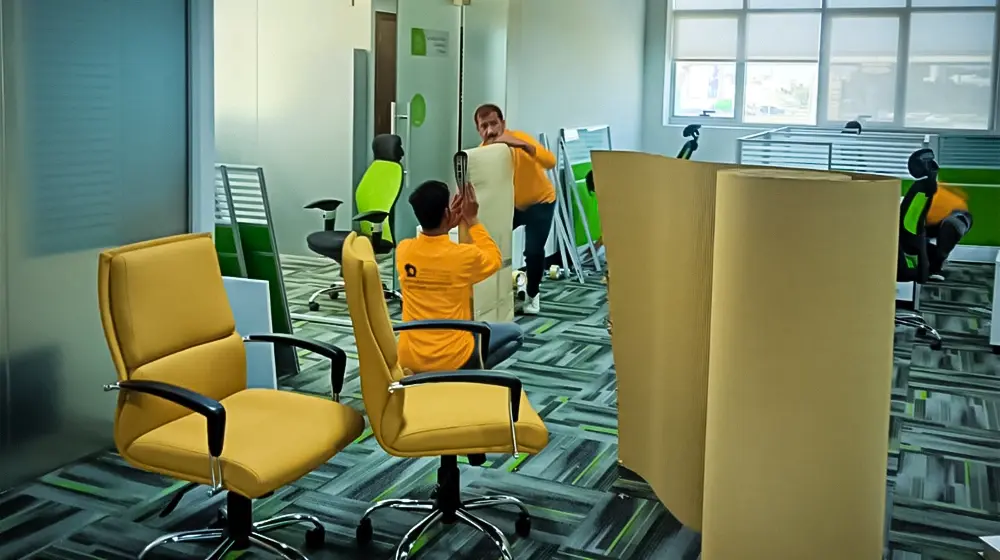
Thinking about moving your office in Al Ain? Let’s be honest, this isn’t like moving house. When your business relocates, every minute of downtime directly hits your revenue and productivity. The pressure is really on if your office is in one of the city’s key hubs, like the busy University zone around UAE University or the critical Healthcare zone near Tawam and Al Ain Hospital.
In these areas, the challenges are unique. You’re dealing with peak, time traffic, tight security checks, and the absolute necessity of not interrupting the essential work happening around you. And yes, the famous Al Ain heat is always a factor, but for a business move, the biggest worry isn’t just sweaty boxes, it’s keeping your operations running without a hitch.
This is where a clever night, shift strategy changes everything. By moving after hours, your team works a normal day, and your business transitions smoothly overnight. You effectively eliminate downtime, turning a potentially disruptive days, long process into a single, seamless overnight shift.
In this guide, we’re going to walk through the nitty, gritty of an office relocation in Al Ain, with a special focus on conquering the logistics of the University and Healthcare zones (ibrahim et al., 2020). You’ll see why switching to a night move isn’t just a handy tip, it’s a critical business decision for any company in these areas that values efficiency, security, and continuity.
Also Read : Office Relocation in Abu Dhabi: IT Disconnect/Reconnect, FM Sign-Offs & After-Hours Booking
Why Moving in University & Healthcare Zones is a Whole Different Ball Game
Let’s get one thing straight: moving a standard downtown office is challenging enough. But when you’re operating in the heart of Al Ain’s academic or medical centers, you’re playing by a completely different set of rules. These aren’t just office buildings; they’re vibrant, complex ecosystems with their own rhythms and demands. Trying to apply one, size, fits, all moving plan here is a surefire way to run into major headaches. So, what makes these zones so tricky?
First off, access is everything. In a hospital zone, where emergency services run 24/7, rolling a large moving truck through during the day can literally get in the way of life, saving work. Over in the university district, the bustle between classes creates small windows of chaos where a moving crew would be stuck navigating a sea of students. You simply can’t just show up and expect to get started. Then there’s the security layer. We’re not just talking about a front desk guard. Hospitals and universities have protocols more akin to secure facilities. Moving confidential patient files, sensitive research data, or high, value server equipment means you need to be on a pre, approved list. Every person and every box might need to be cleared ahead of time.
And let’s talk about the practical nightmare of parking. Finding a spot for a massive moving truck on a crowded street near Tawam Hospital or UAE University during peak hours? Forget it. You’d block traffic, annoy everyone, and likely end up with a fine. Finally, the stuff you’re moving is often incredibly fragile and expensive. This isn’t just desks and chairs. We’re talking about specialized medical diagnostic machines that cost a fortune and require careful calibration, or delicate research lab equipment that’s sensitive to the slightest bump or temperature change. This demands a level of care, what we call ‘white, glove service’, that goes far beyond your average office move (Al Ain Municipality).
Trying to force a standard 9, to, 5 move into this environment is basically asking for a perfect storm of delays, extra costs, and frustration. The only way to succeed is with a custom, built plan that respects the unique heartbeat of these essential community hubs.

Playing by the Rules: Your Guide to Zone Compliance and Safety
Think of Al Ain’s University and Healthcare zones as more than just addresses, they’re highly organized environments with their own distinct pulse. Pulling off a successful office move here isn’t just about transportation; it’s about understanding and respecting a strict set of rules. You need to be part logistician, part diplomat.
Healthcare Zone Moves: Where Precision Meets Protocol
- Moving within a hospital area, whether it’s a clinic or an admin office, is a mission, critical operation. The stakes are incredibly high, with patient safety, data security, and the integrity of multi, million, dirham equipment on the line.
- Regulatory Compliance: Institutions like Tawam Hospital follow a strict rulebook. You’ll be working closely with their facility management team, which means you’ll likely need to submit a detailed moving plan in advance. Don’t be surprised if they ask for the moving company’s insurance documents and even require background checks for every crew member stepping onto the property.
- Handling Medical Equipment: This is where standard moving practices won’t cut it. Transporting an MRI machine or lab analyzers isn’t a simple lift, and, shift job. It demands movers who are specifically trained to handle assets that are both incredibly valuable and extremely sensitive to calibration. Often, the equipment must be de, installed and later re, calibrated by the manufacturer’s own certified technicians, a process that has to be carefully slotted around patient appointments.
- Data and Confidentiality: Patient records, whether physical or digital, must be handled with the utmost security. Movers must use sealed, trackable containers for physical files, and IT relocation must be planned with strict data security protocols in mind (Mistri et al., 2023).

University Zone Relocations: Mastering Timing and Minimal Disruption
The challenge in the University zone, particularly around UAE University, is minimizing disruption to academic activities, research, and student life.
- Academic Calendar Alignment: The ideal time for a move is during semester breaks or summer vacations when foot traffic and campus activity are at their lowest. If a move during the semester is unavoidable, the night, shift strategy becomes essential.
- Research Laboratory Moves: University offices often connected to labs contain sensitive research materials and specialized equipment. Movers must be adept at handling chemical storage, fragile instruments, and ensuring a contamination, free transfer.
- Parking and Access Coordination: University security will have specific requirements for large vehicle access. You must apply for temporary parking permits for the moving truck and clearly map the route to avoid blocking key thoroughfares used by students and staff.
In both zones, the common thread is advanced communication. Early and transparent dialogue with the facility’s administration is the non, negotiable first step to a compliant and smooth relocation.
Your 8, Week Game Plan: From First Step to Moving Day
A successful office move, especially one on a night, shift strategy, is a complex project that demands military, grade planning. Leaving anything to chance is not an option. The key is to break down the process into a clear, actionable timeline, ensuring every detail is accounted for weeks in advance. The most critical first step is appointing an internal move coordinator or a dedicated project manager from your chosen moving company. This person will be the single point of contact, responsible for keeping the entire operation on track.
Here is a practical timeline to guide your office relocation in Al Ain:
The Foundation Phase (8 Weeks Out): Strategy and Setup
- Needs Assessment: Define the scope. Are you moving everything, or will you purge old furniture and equipment? Create a detailed inventory.
- Budget Planning: Establish a realistic budget, including costs for movers, new IT infrastructure, and potential contingencies.
- Vendor Selection: Begin researching and shortlisting moving companies with specific experience in commercial relocations and night moves in Al Ain.
The Planning Phase (4, 6 Weeks Out): Partner Selection and Preparation
- Choose Your Partner: Select a moving company and conduct an on, site survey at both your current and new locations. This is non, negotiable for an accurate plan and quote.
- IT Infrastructure Plan: Engage your IT department or provider to plan the disconnection, secure transport, and reconnection of servers, network hardware, and workstations. This is often the most critical path.
- Notify Stakeholders: Inform clients, suppliers, and employees of the moving date and any potential service interruptions. Update your address on all platforms.
The Coordination Phase (2, 3 Weeks Out): Finalizing Details
- Secure Permits: Finalize all access permissions, NOCs, and parking arrangements with the building management at both locations for the night of the move.
- Pre, Pack Non, Essentials: Begin packing items not needed for daily operations, such as archives, books, and spare equipment. Clearly label every box with its contents and destination room.
- Finalize Night, Move Schedule: Create a detailed minute, by, minute schedule for moving night, shared with the moving company and key internal staff.
The Final Countdown (Moving Week): Last, Minute Checks
- Employee Briefing: Hold a meeting to inform staff of final procedures, including personal packing responsibilities and what to expect on moving day.
- Back, Up Data: Ensure a complete and verified backup of all company data is performed before any equipment is touched.
- Confirm with Vendors: Re, confirm all arrangements with the movers, building management, and IT support.
The Night, Shift Blueprint: A Hour, by, Hour Moving Timeline (Al Ain Municipality (2021))
| Time | Activity |
| 6:00 PM (Office Close) | Employees shut down workstations. IT team begins systematic shutdown of servers and network equipment. |
| 8:00 PM | Moving crew arrives. Pre, move walkthrough with the move coordinator. Furniture is disassembled as needed. |
| 10:00 PM , 2:00 AM | Loaded items are transported to the new location. The moving team follows the planned sequence (e.g., workstations first, then servers, then common areas). |
| 2:00 AM , 5:00 AM | Items are moved into the new office according to the floor plan. IT team begins reconnecting and testing critical systems. |
| 6:00 AM | Moving crew completes their work. Office is clean and ready. |
| 8:00 AM (Next Day) | Employees arrive at the new location. IT provides support for any final workstation issues. Business operations resume. |
Handling Your Digital Lifeline: IT and Equipment Relocation
For any modern business, the most valuable assets are often not the desks and chairs, but the data and technology that power operations. The relocation of your IT infrastructure is the heart of the move and requires a specialized, careful approach.
A standard moving company handles physical objects; your IT needs a technology relocation specialist. The goal is not just to transport equipment, but to ensure a seamless technological transition with zero data loss and minimal downtime.
Critical Steps for a Secure IT Move:
- Pre, Move Audit and Planning: Your IT team or provider should create a complete inventory of all hardware, noting serial numbers and configuration details. They must plan the order of shutdown and startup to ensure systems come back online correctly.
- Secure Data Backup: Before anything is unplugged, a full, verified backup of all servers and critical data must be completed. This is your safety net.
- Specialized Packing: Servers, switches, and computers are sensitive to shock, static, and temperature fluctuations. They require anti, static bubble wrap, dedicated shock, absorbent crates, and climate, controlled transportation if possible.
- Clear Labeling and Reconnection Plan: Every cable and device should be labeled with its location and purpose. Photographing cable setups before disassembly can save hours of frustration during reconnection.
- Phased Reconnection: On arrival at the new office, the most critical systems (core network, servers) should be reconnected and tested first, followed by workstations. This structured approach ensures a smooth restoration of services.
Choosing Your Dream Team: Vetting Al Ain Moving Partners
You wouldn’t hire just anyone for a key role in your company, and the same goes for your moving partner. This choice can make or break your entire relocation. Beyond just getting a quote, you need a team that understands the unique pressures of an Al Ain office move. Here’s a simple checklist to separate the true professionals from the rest (UAE Ministry of Economic Development (2021)).
- Ask for Zone, Specific Experience: This is your first question. Don’t just ask if they’ve done office moves; ask if they’ve handled moves in the University or Healthcare zones. A reputable company will be able to tell you about the specific security protocols at Tawam Hospital or the best times to access UAE University. Ask for a reference or a brief case study.
- Verify Their Credentials, Loud and Clear: Any legitimate moving company in the UAE should be licensed. Politely ask for their license number and proof of insurance. For an office move, you need to see that they have adequate coverage for high, value items like server racks and medical equipment. This isn’t being difficult, it’s being smart.
- Quiz Them on Their Toolkit: Any mover can show up with a truck. You need one that shows up with a plan and the right gear. Ask them pointed questions: “What specific equipment do you use for moving sensitive electronics?” or “How do you protect floors and walls in a high, traffic move?” Their answers will tell you if they’re prepared for the “white, glove” service you need.
- Demand Transparency in the Quote: A trustworthy quote isn’t just a single number. It should be a detailed breakdown that includes costs for packing, labour, transportation, insurance, and any potential additional fees (like for after, hours work). If a quote seems suspiciously low, it probably is. A professional company will justify their costs with a clear plan.
Taking the time to vet your moving partner thoroughly is the best insurance policy for a smooth, stress, free transition.
Final Thoughts: Your Al Ain Office Move – Strategized, Simplified, Successful
Let’s be real, any office move is a major undertaking. But when you’re navigating the unique rhythms of Al Ain’s University and Healthcare zones, it becomes more than just a logistical project; it becomes a test of your business’s resilience and planning prowess.
The challenges are real: the relentless heat, the strict access protocols, the irreplaceable sensitivity of your equipment. But as we’ve seen, these aren’t roadblocks, they’re simply factors that demand a smarter strategy. Embracing a night, shift move isn’t just a clever workaround; it’s your secret weapon for maintaining operational continuity and protecting your most valuable assets.
Remember, the key to a stress, free transition lies in treating your move like the strategic business initiative it is. That means:
- Starting early and choosing a moving partner with proven local expertise.
- Prioritizing communication with facility managers to ensure full compliance.
- Placing precision planning for your IT and specialized equipment at the very heart of your timeline.
You have the blueprint. You understand the landscape. Now, you’re ready to execute a move that is as efficient and professional as your business itself. Welcome to your new, more efficient workspace in Al Ain.
Also Read : How Do I Choose a Reliable Office Moving Company in Dubai?
Office Move FAQs: Your Burning Questions Answered
Q1. What’s the biggest challenge in moving an Al Ain office?
Minimizing business downtime, especially in busy University/Healthcare zones. A night, shift strategy solves this.
Q2. Why move an office at night?
It avoids disrupting daily operations, beats the extreme heat, and allows easier access in high, traffic zones.
Q3. How long does an office move take to plan?
Start planning at least 2, 3 months ahead for a smooth relocation, especially for a night move.
Q4. Is a night move more expensive?
It can cost slightly more, but it’s often cheaper than losing a full day’s business revenue and productivity.
Q5. How do we protect confidential documents?
Use sealed, lockable boxes and choose a mover with a clear chain, of, custody protocol.
Q6. What if our IT equipment gets damaged?
Select a fully insured mover that specifically covers electronic equipment. Verify their policy details beforehand.
Q7. Can employees pack their own desks?
Yes, for personal items. But IT equipment and servers must be handled by professionals to avoid damage.
Q8. When is the best time to move?
Schedule during academic breaks for University zones, or any time using a night, shift strategy to avoid disruptions.
Q9. Do we need special permits?
Yes. You’ll need NOCs (No Objection Certificates) and after, hours access permits from building management.
Q10. What about sensitive medical/lab equipment?
This requires specialist movers experienced in handling, de, installing, and recalibrating high, value technical assets.