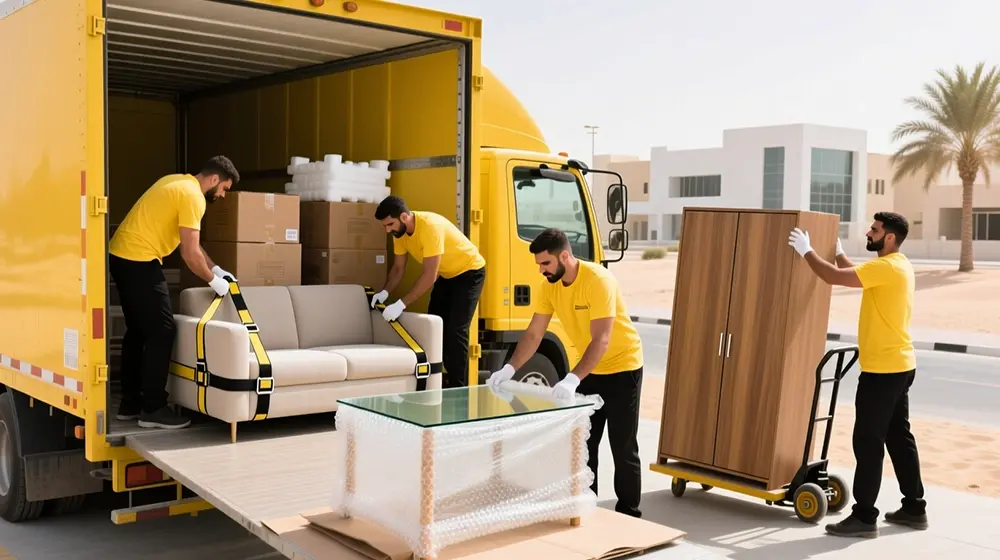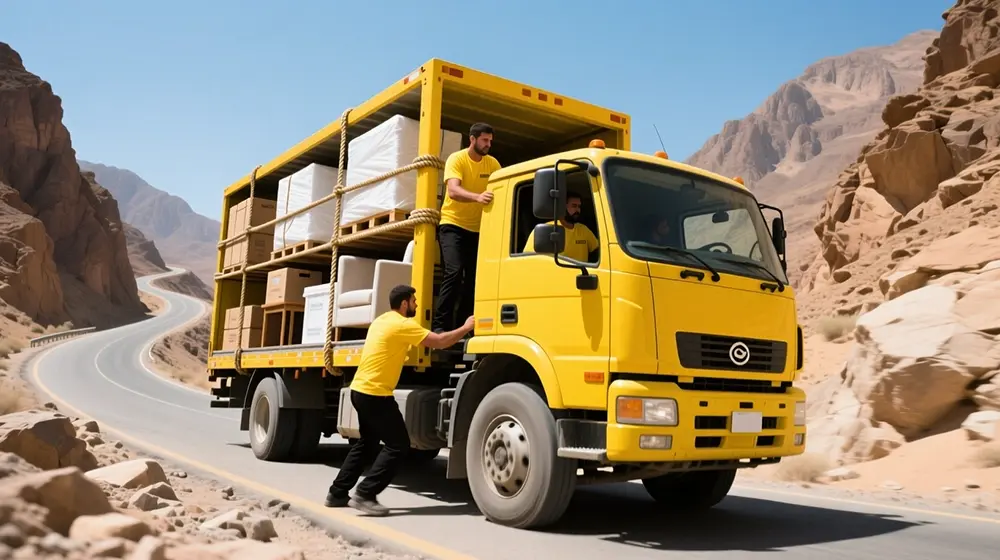
If you’ve only seen the Dubai–Fujairah route on a GPS, it looks like a smooth pull across the country. The map doesn’t show the parts that shake a loaded truck or throw off timing before you even reach the first unloading point. Once you leave the flatter belt past Sharjah and start pushing toward Masafi, the terrain decides how fast you really move—not the engine. Trucks don’t glide the same way once the elevation shifts. You feel it in the steering, the brakes, and the load behind you. Even a tight wrap job done in Dubai starts loosening once the road tilts and curves. Drivers who’ve been on this run more than once don’t bother pretending it’s a straight highway job—they treat it like mixed terrain, because that’s what it is.
And then there’s the speed drop nobody plans for. Climbing slows the truck whether the load is light or stacked. Coming down does the opposite—everything inside the cargo bay shifts forward even if it was strapped well. One bad bend taken too casually and the move isn’t delayed by traffic—it’s delayed by damage. The funny part? Most problems don’t come from the worst turns. They come from the small ones that didn’t look like trouble until a box shifted or a panel creaked. That’s the difference between going to Abu Dhabi and going to Fujairah—you don’t just drive, you manage the road as it changes under you (Driver Route Records – Masafi and Fujairah Highway Runs)
2. Fragile Loads Don’t Travel the Same Once the Road Starts Bending
On flat roads, wrapping and padding feel enough. The moment the truck hits those winding corridors past Al Dhaid and moves toward the Fujairah side, whatever wasn’t secured properly starts telling on you. Boxes shift, straps loosen a little, and you hear sounds you don’t hear on the Abu Dhabi or RAK runs. Glass, mirrors, appliances, framed décor—anything with corners or panels—reacts differently when gravity isn’t pulling straight down anymore.
Even the air pressure inside the cargo area changes with elevation. What was tight in Dubai sometimes starts breathing by the time you pass Masafi. That’s why crews who know this route don’t trust “good packing.” They double-wrap sharp edges, add cushion under bottom panels, and wedge items so they can’t slide forward on downhill curves. (Packaging and Load Stabilization Guidelines – UAE Logistics Field Teams)
It’s not just the road surface—it’s the rhythm of the terrain. You climb, you dip, you turn, you correct. A small fridge or a boxed TV that would sit still on E311 can start drifting with every lean of the chassis. One careless wrap job turns into a call to the client before the truck reaches the Fujairah city line. The movers who’ve learned the hard way don’t brag about speed—they brag about arriving without opening the truck to a surprise.
3. What Crews Secure Before Leaving Dubai (The Stuff You Don’t Fix on the Mountain)
Nobody with experience waits until the first bend to find out if the cargo was tied right. The mountain stretch toward Fujairah doesn’t forgive lazy packing, and once the load starts shifting, you can’t pull over anywhere safe to fix it. Here’s what seasoned crews lock down before the truck even rolls past Sharjah (Load Restraint Notes – UAE Fleet Supervisors):
- Straps get tensioned twice, not once. Anything with weight or height gets anchored low so it doesn’t lean forward on the downhill turns.
- Glass and mirrors never ride loose against walls. They’re wedged, cushioned, or boxed flat, because one incline can crack a corner that looked secure in the warehouse.
- Cabinets and wardrobes get their doors taped or removed. If a hinge pops open on a climb, the whole unit can shift and crush lighter boxes around it.
- Heavy items aren’t stacked just to save space. Mountain gradients make top-heavy packing a problem fast, especially on the descent.
- Shock gaps get filled, not ignored. Blankets, pads, or foam get shoved between stacks so nothing gains momentum when the truck leans.
- Tie-down points get checked after loading, not during the drive. The drivers who’ve snapped straps don’t let that happen twice.
This isn’t overkill—it’s insurance against hearing a crash in the back halfway down a slope with nowhere to stop. The teams that don’t prep right don’t always lose time on the road—they lose their entire move when they open the container at the drop-off.
4. E102 vs. Khorfakkan Road — The Road You Pick Changes the Load You Risk
People think both routes to Fujairah behave the same once you clear the city limits. They don’t. Each one hits the truck differently, and if you pick based on the map instead of the load, you find out the hard way. Here’s how the two main stretches actually stack up when you’re hauling furniture, appliances, or anything with glass, joints, or panels (UAE Mountain Transport Briefings):
| Factor | E102 (Sharjah–Kalba / Masafi Route) | Khorfakkan Road (via Maliha / E611) |
| Elevation Change | Steady climb, rolling descent after Masafi | Sharper rises and dips near tunnel areas |
| Load Stability | Easier to control if strapped well | Sudden shifts if packing is weak |
| Driver Stress Points | Curves are longer, easier to anticipate | Blind bends and quicker steering changes |
| Fuel Impact | Moderate burn climbing, recover downhill | Higher consumption on repeated uphill pulls |
| Checkpoints & Patrols | Masafi area checks for commercial loads | Random stops near tunnel and port access |
| Emergency Shoulders | Limited but predictable | Some stretches give no space to pull aside |
| Time Predictability | Good if departure is early | Slips fast if traffic or weather changes |
The crews who’ve done both don’t call one road “better.” They call one “less likely to shake something loose if your wrapping is half-right.” Picking the wrong stretch for the wrong cargo is how a smooth job turns into a claim before Fujairah City.
5. One Bad Bend Can Undo an Entire Move
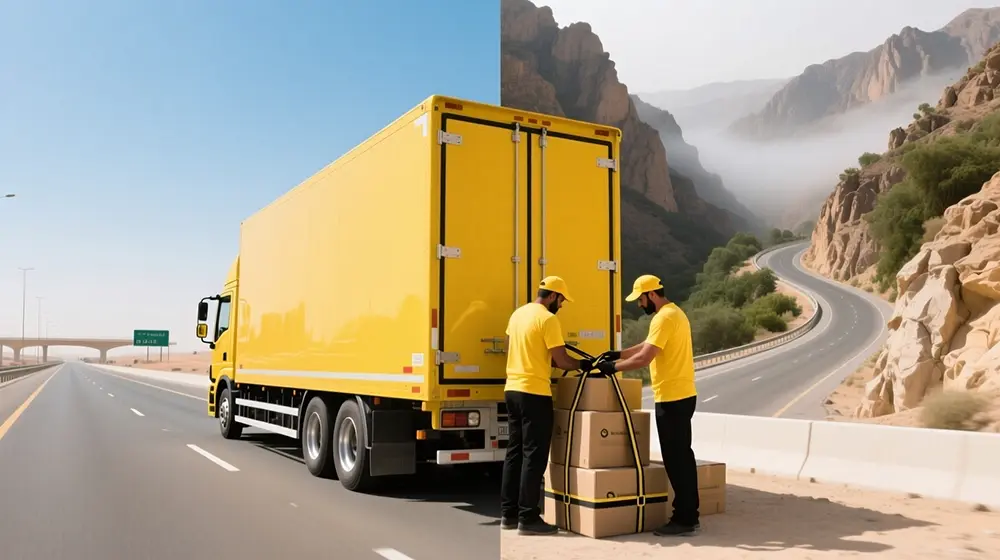
You don’t need a landslide or a blown tire to lose time on the Fujairah run—one wrong turn at the wrong angle is enough. The descent after the Masafi stretch is where most crews realize whether the packing was honest or just hopeful. A tight strap hides mistakes on flat ground, but once the truck leans or dips, whatever wasn’t braced properly starts talking.
It’s not always the big turns that cause damage. The smaller bends—the ones drivers take without braking—do more harm than people expect. A fridge slides two inches, a glass cabinet taps something solid, or a stack of boxes shifts just enough to create pressure on a joint. You won’t always hear it when it happens, but you’ll see it when the door opens in Fujairah.
Fog and loose gravel add their own problems. You hit a shaded patch near the rock cuts, the tires grip differently, and the driver instinctively taps the brakes. That tiny slowdown causes a forward push inside the cargo bay, and now the weight isn’t sitting where it was strapped. You can’t fix that mid-route—there’s nowhere safe to stop without turning a delay into a hazard.
The worst part? Clients don’t blame the road—they blame the mover. They don’t care that the box shifted on a downhill bend; they just see a cracked panel or broken corner. The crews who’ve learned this route don’t drive it like a highway—they drive it like a test of everything they secured back in Dubai (Mountain Descent Safety Logs – Masafi Corridor Fleet Reports)
6. Fragile Cargo vs Road Reality — What Fails First and Why
Here’s where most people get it wrong: they treat delicate items the same way they do on a flat-city move. The mountain run exposes weaknesses fast. It’s not theory—you see the damage when the doors open in Fujairah. This is how different items react once elevation, vibration, and downhill force start working on them:
| Item Type | What Usually Goes Wrong | Where It Happens | Why It Fails |
| Glass Tables | Hairline cracks or full shatter | Downhill bends near Masafi | Pressure shifts on unsupported joints |
| Large Mirrors | Corner chips or backing damage | After first elevation drop | Packed flat without buffer or wedge |
| Refrigerators | Rear panel dents or front tilt | Sudden brake or curve correction | Base not locked or strapped low |
| Wall Décor / Frames | Loose glass, snapped hooks | Mid-curve rotations | Wrapped only in blankets, no rigidity |
| Office / Lab Equipment | Internal dislodging, casing cracks | Sharp turns or gravel slips | No shock padding underneath |
| Wooden Cabinets | Joint separation or door misalignment | On descent or re-acceleration | Strapped high or stacked wrong |
The loads that arrive intact aren’t lucky—they were packed by crews who assume the road will test every strap, hinge, and corner. Those who pack like it’s a city transfer don’t always see damage on the way—but they see it when the client does.
7. Fujairah Doesn’t Work on Dubai Timing — Access, Gates, and Coastal Rules
The finish line on this route isn’t the city border — it’s the building that either lets the truck in or keeps it parked outside. Unlike Dubai, where most towers and villas follow predictable access windows, Fujairah properties can run on older systems, limited guard shifts, or stricter weekend handling.
Here’s what movers with field time have learned the hard way:
- Gate staff don’t always accept unsigned delivery notes: If the building name isn’t on paper or the recipient isn’t reachable, the truck waits — even if it’s fully loaded and on time.
- Some villas require advance notice through management, not a phone call: Crews that assume a WhatsApp message will do end up sitting at security while someone hunts for approval.
- Coastal humidity affects unloading more than people think: Wood, metal fixtures, and adhesives react differently when the truck doors open after elevation and heat changes during the climb.
- Friday and late evening slots close faster than in Dubai: A driver reaching at the wrong hour won’t argue his way through a checkpoint — timing beats explanation.
- Old complexes use manual logging instead of digital access: If the guard can’t verify the truck or company name in their record, nobody touches a single box until someone higher up approves.
Movers who’ve run this corridor long enough don’t just focus on the drive — they start planning the drop-off before the first strap is even tightened in Dubai. One missed confirmation can cost more time than the entire mountain stretch (Fujairah Residential Access Logs).
8. What Gets Checked Before the First Turn
The teams that make it to Fujairah without mid-route trouble don’t rely on fixes once the truck hits elevation. They clear their list before rolling out, because there’s nowhere safe to adjust straps or hunt papers once the climb starts.
| What They Check | Why It Matters Before Hitting the Mountain Roads |
| Brake Response | Downhill curves expose weak pedals fast — there’s no shoulder to correct a mistake. |
| Strap Tension | Tight once isn’t enough; elevation and tilt loosen the first round of tying. |
| Fuel Level | You can’t count on a stop after Masafi if the tank dips lower than expected. |
| Printed Documents | Patrols don’t wait for someone to load a PDF or find network coverage. |
| Loose Cargo Items | Anything that can slide will move the minute the road bends or drops. |
| Driver Rest Status | A tired driver reacts a second late — and that second shows on a descent. |
This table reflects how crews who’ve run the route often think — not polished, not theoretical, just learned from what’s gone wrong before.
9. When You Pack Like It’s a City Job, the Road Exposes It
The quickest way to lose time on the Fujairah run isn’t traffic or checkpoints — it’s loading the truck the same way you would for a flat Dubai move. What looks fine on straight roads falls apart once the incline, bend, and descent start working on the cargo.
Here’s what crews see over and over from rushed or city-style packing:
- Top-heavy stacking collapses on the first downhill turn. Boxes that sit perfectly still in Dubai start leaning forward once gravity shifts.
- Unpadded edges scrape or crack without anyone hearing it happen. A corner that survives an E311 ride won’t tolerate a downhill slide on the Masafi side.
- Furniture joints start separating quietly. It isn’t impact that does it — it’s the constant micro-movement during curves.
- Blanket-only wrapping doesn’t hold against vibration. What feels “protected” in Al Quoz can start rubbing through by the time you pass Al Dhaid.
- Loose appliances rock inside their own straps. A washing machine or mini freezer still shifts if the base isn’t blocked from both sides.
- Boxes packed tight but not wedged shift as a group. Once one tilts, whatever is beside it starts moving as well, even if they were strapped.
Nobody sees the damage happen in real time — the truck is sealed and moving. The shock comes when the doors open in Fujairah and something that looked secure in the warehouse has a dent, crack, or twist.
The teams who don’t make those mistakes aren’t being clever — they’re just loading for the terrain, not the postcode.
10. Final Take — The Road Doesn’t Break the Load, the Prep Does
People blame the mountain stretch for damage, but the road only exposes whatever was ignored before leaving Dubai. Once the truck starts climbing and dropping, there’s no safe place to re-secure a loose strap or repack a box that was rushed. By the time you reach the Fujairah side, whatever wasn’t tied, cushioned, or braced properly has already shifted — whether you hear it or not.
Crews who’ve done this run more than once don’t talk about how “tough” the road is. They talk about the three things that decide whether the job survives the trip: when the loading started, how the weight was anchored, and whether the driver was rested before the engine turned. You don’t fix those halfway through Masafi.
A cracked table leg, a split cabinet joint, or a dented fridge doesn’t come from the bend — it comes from a shortcut taken in the warehouse. The drivers who open the back in Fujairah without flinching didn’t get lucky. They treated the job like a mountain run before the GPS even started.