

Al Ruwais is home to one of the UAE’s most advanced refining and petrochemical hubs. The scale is enormous: billions of dollars have been invested in expansion, and the site employs tens of thousands of staff across industrial and residential zones. Because the community and housing facilities are tied to ADNOC, every relocation must respect the permit-first framework. Trucks cannot simply arrive at the gate; permits, NOCs, and crew registrations are checked before entry is allowed (ADNOC – Ruwais Industrial Complex).
In Al Ruwais, office relocation is less about logistics and more about compliance. A company planning to move its office must prepare permits, apply for gate passes, clear utility accounts, and meet safety requirements well in advance. Missing a single clearance can halt the process. For this reason, businesses planning relocation in Al Ruwais need to approach the move as a compliance-led project, not just a physical shift of equipment.
Also Read : Office Relocation in Al Ain: Mastering the University/Healthcare Zones with Smart Timing
This guide will explain:
- Why Al Ruwais is a unique relocation zone,
- The oil and gas access rules that shape every move,
- How to prepare a compliance pre-check before relocation begins,
- Timing, transport, and access challenges specific to this region,
- And how working with professionals ensures a move that is smooth, compliant, and stress-free.
In Al Ruwais, success starts not with boxes and trucks but with permits, compliance, and planning ahead.
Ruwais Industrial Complex: What Makes Al Ruwais a Unique Relocation Zone
Office relocation in Al Ruwais cannot be compared to relocation in other parts of the UAE. The town itself is not a typical city, it is a planned industrial hub built around the oil and gas sector. Every office, community facility, and housing block exists to support the enormous Ruwais Industrial Complex, which ADNOC has developed into one of the largest refining and petrochemical hubs in the world.
The Scale of the Ruwais Industrial Complex
ADNOC’s investments in Al Ruwais are measured in billions. Expansion projects over the last decade alone exceed USD 45 billion, transforming the area into a global player in downstream oil and gas. The complex has a refining capacity of more than 900,000 barrels per day, with associated petrochemical, gas processing, and logistics facilities operating alongside it (ADNOC – Ruwais Industrial Complex).
For office relocations, this scale matters. It means that almost every building, whether administrative or residential, falls under some layer of industrial governance. Moves are not only about shifting office furniture, they are about ensuring compliance with oil and gas zone protocols.
Corporate-Managed Communities
Unlike Dubai or Abu Dhabi City, where most offices operate in private towers or leased commercial space, Al Ruwais functions as a corporate-managed town. Housing, offices, and community facilities are tied to ADNOC and related contractors. This makes relocation unique in two ways:
- Permits before planning: All relocations require clearance from housing or facility management.
- Security as priority: Gate passes, ID verification, and background checks are part of the process.
In other emirates, failing to book a service elevator might delay a move by a few hours. In Al Ruwais, failing to secure permits means trucks will never pass the security gate.
Strategic Location and Infrastructure Challenges
Al Ruwais sits in the far western region of Abu Dhabi, close to the Saudi border and about 240 km from Abu Dhabi City. This distance adds complexity to relocations:
- Moving crews and trucks must travel long routes.
- Replacement materials or extra manpower are not readily available if forgotten.
- Road access overlaps with industrial transport, including tankers and heavy trucks linked to oil and gas.
Because of this, relocations need to be planned with precision. Low-traffic windows, transport approvals, and strict scheduling play a much greater role in Al Ruwais than in central business districts elsewhere in the UAE (Abu Dhabi Department of Municipalities and Transport).
Why Businesses Must Prepare Differently
Office relocation in Al Ruwais is not a standard logistical task. It is an operation within a heavily regulated industrial ecosystem, where compliance is as important as packing. Companies moving offices here must treat the process like a corporate project, involving:
- Early permit applications,
- Detailed compliance pre-checks,
- Coordination with facility and security offices,
- And strict adherence to oil and gas zone protocols.
Failure to understand these differences often leads to denied access, wasted resources, and significant delays. Businesses that succeed are those that start early, prepare thoroughly, and recognize that in Al Ruwais, compliance comes before logistics.
Securing Oil & Gas Zone Access: Permits, Gate Passes, and Security Protocols
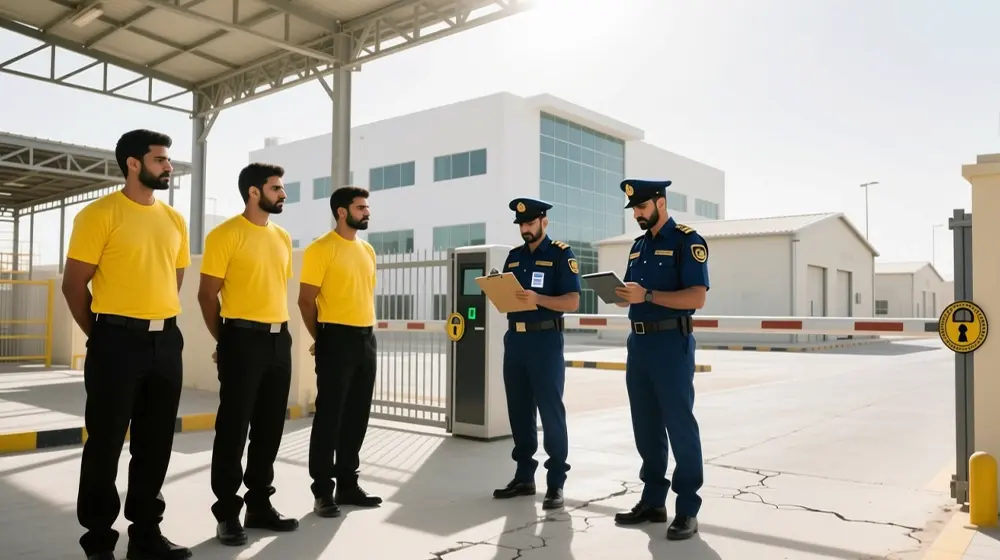
Relocating an office in Al Ruwais comes with an additional layer of complexity: gaining access to oil and gas zones. Unlike residential or commercial relocations in urban centers, every office move in this region is linked to the operational backbone of ADNOC and its industrial ecosystem. The result is a system where permits, gate passes, and compliance clearances are non-negotiable.
Permit Applications Before Relocation
The first requirement for any office move in Al Ruwais is a valid move-in or move-out permit. These are issued by community or facility management offices that oversee housing and office units within ADNOC’s jurisdiction. A permit application usually includes:
- A copy of the tenancy agreement or company allocation letter.
- Emirates ID of the responsible company representative.
- Details of the moving company, including trade license and insurance.
- Proposed relocation date and time.
Approval is only granted once outstanding obligations, such as service charges or utility bills, have been cleared. Without this document, no moving truck or crew will be allowed into the premises (Al Ruwais Municipality).
Gate Passes for Trucks and Crew
In industrial zones, gate passes serve as the primary control mechanism. Every truck entering a restricted area must carry an approved gate pass listing:
- Vehicle registration details.
- Driver’s Emirates ID.
- Names of crew members.
- Confirmation of the approved relocation slot.
Security officers at ADNOC-managed gates verify these passes before entry. If even one detail is missing, access is denied. For large-scale office moves, multiple passes may be needed for trucks carrying different loads. This adds another layer of planning, as all passes must align with the approved relocation schedule.
Security and Access Control
Al Ruwais is home to sensitive oil and gas infrastructure, so security protocols are tighter than in other emirates. Access checks often include:
- ID verification for every crew member.
- Pre-registration of movers’ details with facility security.
- Restriction of equipment that can be carried inside (e.g., photography and video equipment may be banned).
- Monitoring of loading and unloading areas to ensure compliance with safety standards.
These measures protect critical infrastructure but also slow down the relocation process if paperwork is incomplete.
Industrial Safety Compliance
In addition to gate passes and permits, movers must comply with industrial safety rules. This includes wearing protective gear such as helmets, gloves, or reflective vests when entering certain zones. Facility supervisors may inspect movers’ equipment, such as trolleys or lifting straps, to ensure they meet safety requirements (MOHRE – Ministry of Human Resources and Emiratisation).
Why Access Rules Are Non-Negotiable
Oil and gas operations in Ruwais support a large share of the UAE’s economy, and disruptions in this environment are not tolerated. Access rules are designed to protect industrial assets, ensure the safety of workers, and prevent unauthorized entry. For companies planning relocation, this means compliance comes first, logistics second. Even a perfectly planned move will fail if permits and passes are not secured.
Compliance Pre-Check Essentials: Documents, NOCs, and Crew Registration
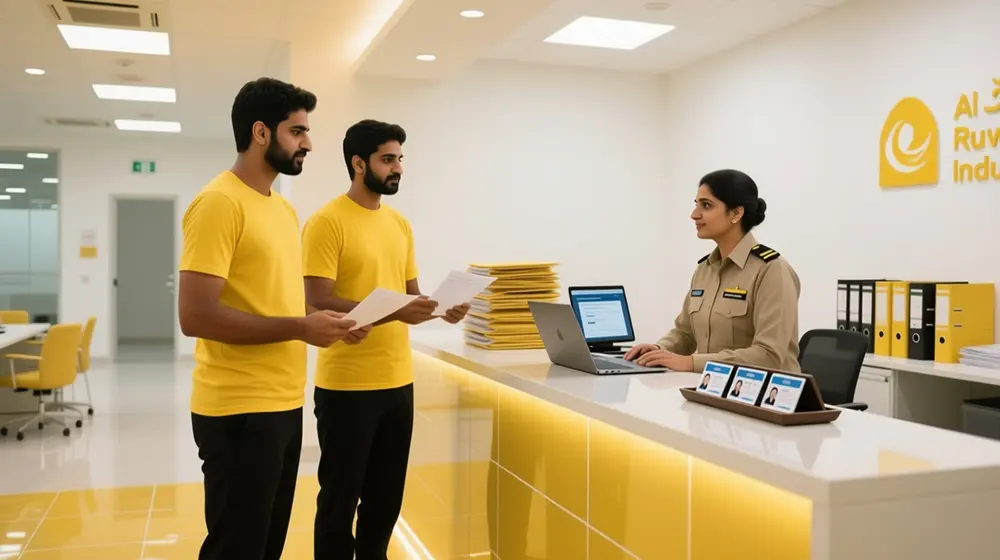
Before a single box is packed, businesses in Al Ruwais must pass through a compliance pre-check process. This is not an optional step but a mandatory requirement enforced by ADNOC’s housing and industrial management offices. The compliance stage ensures that tenants have cleared all obligations, that movers are properly authorized, and that safety and security protocols will be observed throughout the relocation.
Essential Documentation
- Tenancy Agreement or Allocation Letter: A valid tenancy agreement for leased office space, or a company allocation letter in ADNOC-managed facilities, is required to prove legal occupancy. Without this, a move-out permit will not be issued (Al Ruwais Municipality).
- Trade License and Insurance Certificates: The moving company must present its UAE trade license along with insurance coverage. Facility offices often request proof of coverage for both property and liability to safeguard against damages during relocation (UAE Ministry of Economy).
- Utility Clearance Letters: All outstanding bills for electricity, water, and telecom services must be settled. Clearance letters from providers serve as evidence that no dues remain before vacating premises.
- NOCs (No Objection Certificates): An NOC from facility management confirms that service charges, community fees, and corporate obligations have been cleared. Without an NOC, security will not issue gate passes.
Crew Compliance
- ID Verification: Every crew member must submit Emirates ID copies in advance for security pre-registration.
- Uniforms and Safety Gear: Movers entering industrial or camp zones are required to wear protective clothing such as vests, gloves, or helmets.
- Pre-Approval of Crew Lists: Security will not allow unregistered crew members to enter, even if they are part of the moving team.
These checks ensure that only authorized and accountable personnel are allowed inside sensitive oil & gas housing and office blocks (MOHRE – Ministry of Human Resources and Emiratisation).
Why the Pre-Check Matters
A compliance pre-check protects both companies and communities. For businesses, it prevents last-minute surprises, such as trucks being denied entry. For ADNOC and Al Ruwais authorities, it safeguards high-risk industrial zones and ensures orderly transitions. In practice, the pre-check is the true starting line for any relocation project.
Transport and Timing in Ruwais: Overcoming Industrial Traffic and Restricted Roads
Transport and access timing play an outsized role in office relocations in Al Ruwais. Unlike metropolitan areas such as Dubai or Abu Dhabi City, where traffic peaks follow office hours, Ruwais is governed by the rhythms of oil and gas operations. The presence of ADNOC’s industrial complex, its housing communities, and the constant movement of heavy transport vehicles creates a unique environment for scheduling relocations.

Industrial Traffic Overlap
The most visible challenge comes from the overlap of industrial and residential traffic. Trucks transporting crude oil, refined products, and industrial supplies frequently share road networks with residential vehicles. According to ADNOC’s operational reports, Ruwais supports tens of thousands of daily workers and hundreds of heavy-duty vehicles entering or exiting industrial sites.
For relocation planners, this means that trucks carrying office furniture may have to compete for road space with fuel tankers and supply vehicles. Any miscalculation in timing can result in congestion, delayed entry at security gates, or even denial of access if movement is attempted during restricted periods (Abu Dhabi Department of Municipalities and Transport).
Road Restrictions and Safety Protocols
In Al Ruwais, heavy vehicles are subject to stricter rules than in urban centers. Certain roads near the refinery, port, and petrochemical plants may restrict entry during peak operations. This is to reduce the risk of accidents, especially when oil and gas cargo is being transported.
Movers must coordinate with local transport authorities and ADNOC security to identify which roads are open and at what times. Ignoring these restrictions can result in trucks being turned back or fined. More importantly, such restrictions reflect Ruwais’ status as a critical infrastructure zone, where road safety is tied directly to national energy security.
Low-Traffic Window Planning
To avoid congestion and security bottlenecks, professional movers in Al Ruwais adopt a “low-traffic window” strategy. This involves:
- Early Morning Slots: Before industrial fleets fully mobilize.
- Midday Gaps: When shift workers are inside facilities and traffic is lower.
- Avoiding Evening Hours: When community residents return home and industrial vehicles overlap on shared roads.
By selecting the right low-traffic window, relocation teams can reduce time wasted at checkpoints and ensure smoother access to housing or office complexes (Fujairah Transport Authority).
Security Checkpoint Delays
Every relocation in Ruwais involves passing through at least one security checkpoint. Trucks and crew are required to show gate passes, ID documents, and permits before entry. During high-traffic hours, these checkpoints become congested, adding further delays.
Scheduling relocations during low-traffic windows not only reduces road congestion but also ensures quicker clearance at checkpoints. Experienced movers typically send representatives ahead of time to confirm with gate officers that permits are validated for the selected slot.
Weather Considerations
The climate in Al Ruwais and along Abu Dhabi’s western coastline is not always predictable. While most days are clear, sudden dust storms can sweep across from the desert, reducing visibility to only a few meters. Humidity levels along the Gulf of Oman also rise sharply during summer, which can affect equipment, slow down vehicle movement, and make loading conditions more difficult for crews. A relocation team that sets out on what seems like a normal morning can quickly find themselves delayed if a storm forces heavy trucks to reduce speed on highways or wait at checkpoints. For this reason, businesses preparing to move in or out of Ruwais should keep a close watch on NCEMA weather bulletins and factor in extra time for contingencies, rather than assuming that conditions will remain stable.
Why Timing Defines Relocation Success in Ruwais
When it comes to moving offices in Ruwais, timing often matters as much as the paperwork. A company may have every permit stamped and all documents ready, but if the trucks arrive during a wave of industrial traffic, the entire operation can stall. Picture a relocation convoy queued behind dozens of oil tankers trying to clear the same checkpoint—it means hours lost, additional labor charges, and employees waiting to resume work. Similarly, missing an approved time slot for a community’s service elevator can force movers to push the entire relocation to another day.
The businesses that relocate successfully in Al Ruwais are those that plan the move around more than just their own schedule. They look at industrial timetables, traffic restrictions on heavy vehicles, weather forecasts, and even community activity before choosing the right relocation window. Professional movers familiar with the region often act as coordinators rather than simply transporters, advising companies on when and how to move so that relocation runs smoothly. This blend of logistical insight and local experience is what prevents delays and ensures compliance with Ruwais’ strict relocation framework.
The Al Ruwais Office Move Checklist: A Compliance-First Guide for Businesses
In Al Ruwais, a successful office move depends on far more than packing boxes or hiring a truck. Because most offices are tied to ADNOC’s oil and gas ecosystem, the process is governed by security rules, compliance pre-checks, and community regulations. Missing even one step can stop the move at the gate.
The checklist below is designed for businesses planning relocation in Al Ruwais. It highlights the permit-first approach, compliance requirements, and logistical essentials needed to complete the move smoothly.
Also Read : Office Relocation in Fujairah: Strategic Port Access and Low-Traffic Timing
Step-by-Step Compliance-First ChecklistA
| Step | Action Required | Why It Matters |
| 1 | Confirm tenancy or allocation letter | Proves legal right to occupy or vacate the office |
| 2 | Apply for move-in/move-out permits | Mandatory approval before movers are allowed access |
| 3 | Secure NOCs from facility management | Confirms all dues, service charges, and community fees are cleared |
| 4 | Obtain gate passes for trucks and crew | Ensures vehicles and staff can pass ADNOC security checkpoints |
| 5 | Prepare mover’s documents (license & insurance) | Required to prove movers are authorized and insured |
| 6 | Settle utilities and request clearance letters | Prevents delays caused by unpaid electricity, water, or telecom bills |
| 7 | Register crew with IDs and pre-approve staff lists | Ensures compliance with security and occupational safety rules |
| 8 | Book low-traffic relocation slots | Avoids industrial truck congestion and checkpoint delays |
| 9 | Arrange bulky waste disposal or recycling | Keeps relocation compliant with community and environmental rules |
| 10 | Conduct compliance pre-check with movers | Verifies all documents and approvals before moving day |
Why a Checklist Matters in Al Ruwais
Unlike other emirates where relocation depends mainly on scheduling, in Al Ruwais relocation success is about compliance sequencing. By following the checklist step by step, businesses ensure that permits are secured, crews are registered, and access is approved before the first box is touched.
For tenants, this prevents costly delays. For ADNOC and Al Ruwais authorities, it ensures that community life and industrial safety are not disrupted. And for movers, it provides a clear roadmap to deliver efficient, compliant services.
Employee and Operations Coordination: Minimizing Downtime During Relocation
In Al Ruwais, an office move is not only about trucks, permits, and compliance paperwork , it is also about the people who keep the business running. Because most offices here are directly tied to oil and gas operations, even short disruptions can ripple across critical functions. Coordinating with employees before, during, and after relocation is therefore a vital part of the process.
Internal Communication Plans
Relocation should never catch employees by surprise. In ADNOC-linked offices, clear communication is expected:
- Notices must be circulated well in advance.
- Staff should be informed of downtime and relocation schedules.
- Department heads should coordinate backup plans for essential services.
This type of planning minimizes productivity loss and ensures that employees continue to operate smoothly even as the office transitions.
Shift-Based Moving to Reduce Downtime
Because Al Ruwais offices often operate within strict industrial timetables, companies may opt for staggered relocations. This allows core departments (like engineering, logistics, or operations) to remain functional while non-essential divisions relocate first. By using shifts, businesses prevent a full shutdown and protect critical industrial activities.
Safety Compliance for Staff
Community supervisors often restrict staff access during relocation to reduce accidents in hallways, elevators, and loading zones. This makes it important to prepare:
- Temporary remote work setups.
- Alternative meeting spaces.
- Clear safety guidelines for employees entering the premises during the move.
Coordinating employees is not just about efficiency, it is about ensuring that relocation respects community safety policies and avoids disruption to the industrial ecosystem of Ruwais.
Relocating IT and Sensitive Equipment: Protecting Data and High-Value Assets
Another overlooked aspect of relocation in Al Ruwais is the movement of IT infrastructure and sensitive office equipment. In oil and gas-linked offices, this equipment often includes not only computers but also specialized data terminals and servers. Improper handling can cause data loss, downtime, and compliance violations.
Protecting Digital Assets
Before any move, IT teams should:
- Create full system backups.
- Encrypt sensitive company data.
- Prepare asset lists with serial numbers.
- Assign staff to supervise servers and storage devices during packing.
This ensures compliance with data protection standards and prevents loss of sensitive operational data (TDRA – Telecommunications and Digital Government Regulatory Authority).
Specialized Packing and Insurance
Electronics are highly vulnerable to Ruwais’ coastal humidity and dust. Professional movers use:
- Anti-static wrapping.
- Shock-absorbing crates.
- Moisture-resistant packaging.
Insurance certificates should also specifically cover IT and electronics. Facility management often requests proof that high-value systems are insured before permitting relocation inside ADNOC-linked complexes (UAE Ministry of Economy).
Reinstallation and Compliance
On arrival at the new site, IT equipment must be reinstalled according to internal compliance policies. This includes reconnecting to secure networks, verifying firewall configurations, and testing operational systems before resuming business functions.

How Professional Movers Navigates Oil & Gas Relocations in Al Ruwais
Relocating an office in Al Ruwais is a high-stakes operation. Unlike in other emirates, where moving is primarily about logistics, here the focus is on permits, compliance, and navigating oil and gas zone regulations. For many businesses, this complexity can feel overwhelming. This is where Delight Movers UAE adds unmatched value , by combining relocation expertise with local knowledge of Al Ruwais’ regulatory environment.
Mastery of Oil & Gas Zone Compliance
One of the greatest challenges in Al Ruwais is securing approvals to move within ADNOC-managed housing and office complexes. Our team has direct experience working with community management and industrial authorities. We understand how to prepare documentation, apply for permits, and align with compliance pre-checks so that businesses don’t face last-minute rejections at the security gate.
Permit-First Coordination
We follow the same “permit-first gameplan” that authorities enforce in Al Ruwais. Before scheduling trucks or assigning crews, our coordinators secure move-in/move-out permits, NOCs, gate passes, and service lift reservations. This ensures that when moving day arrives, entry is guaranteed and downtime is minimized (Al Ruwais Municipality).
Pre-Registered and Trained Crews
In controlled communities like Ruwais, moving crews must be pre-registered with security offices. We handle this process in advance by submitting Emirates ID copies, registering names, and obtaining temporary access cards. Our teams also comply with occupational safety standards by using protective gear such as helmets, reflective vests, and gloves (MOHRE – Ministry of Human Resources and Emiratisation).
Conclusion: Compliance First, Relocation Made Simple
Relocating an office in Al Ruwais is unlike moving in any other part of the UAE. Here, the presence of the Ruwais Industrial Complex, ADNOC-managed communities, and oil & gas security rules means that a move is never just about transport and logistics. It is about permits, gate passes, crew registration, and compliance checks that must be secured before a single truck is allowed inside.
The challenges are real:
- Industrial traffic overlaps with residential access.
- Security checkpoints demand pre-approved documentation.
- Crews must be registered and follow strict safety rules.
- Disposal of old assets must comply with municipal and environmental guidelines.
For businesses, this creates a relocation environment where paperwork matters as much as packing, and where timing decisions can make or break a moving day. The difference between success and costly delays lies in preparation. Companies that approach relocation as a compliance-first project will find the process manageable and efficient.
This is where Delight Movers UAE provides assurance. Our team specializes in navigating Ruwais’ regulatory framework, securing the right permits, coordinating with ADNOC community offices, and ensuring every step follows official standards. With our expertise, businesses can relocate smoothly, maintain compliance, and minimize downtime , even in one of the UAE’s most heavily regulated industrial hubs.
At the end of the day, office relocation in Al Ruwais is not about moving desks or files. It is about protecting business continuity, respecting community rules, and complying with oil & gas security protocols. With the right partner, these challenges become opportunities for a seamless, stress-free move.


